Ine Funaya & Upper Tango Peninsula: Kyoto’s Historic Floating Boathouses
Two hours north of Kyoto along the Sea of Japan, 230 wooden funaya boathouses perch right above sheltered Ine Bay—combining ground-floor boat slips with second-story living quarters.
Field Warnings & Critical Traps to Avoid
Strict private residential privacy rules, 18:30 final bus cutoff, and Wednesday closures.
Strict Zero-Trespassing Rule on Private Ground-Floor Boat Slips
Nearly all 230 funayas remain private homes and working fisheries, not an open museum theme park. Never step onto private boat ramps, open doors, or cross fences marked with resident warnings—enter only explicitly signed public venues such as Funaya Koyomaru.
Early 18:30 Final Return Bus Cutoff & Scarce Night Dining
Ine has zero convenience stores and few rural taxis. The last Tankai bus south toward Amanohashidate departs prior to ~18:30, while non-lodging diners close early around 17:00–18:30. Confirm schedules right upon arrival so you are not stranded.
Wednesday Shop Closures (Including Koyomaru) & Bike Deposit Rules
Wait before planning a Wednesday trip: public heritage boathouse Koyomaru closes Wednesdays, alongside several small bay shops. Furthermore, free village community bicycles require a refundable 2,000 JPY cash deposit at tourist counters (limited stock—never abandon bikes randomly along narrow 3-meter streets).
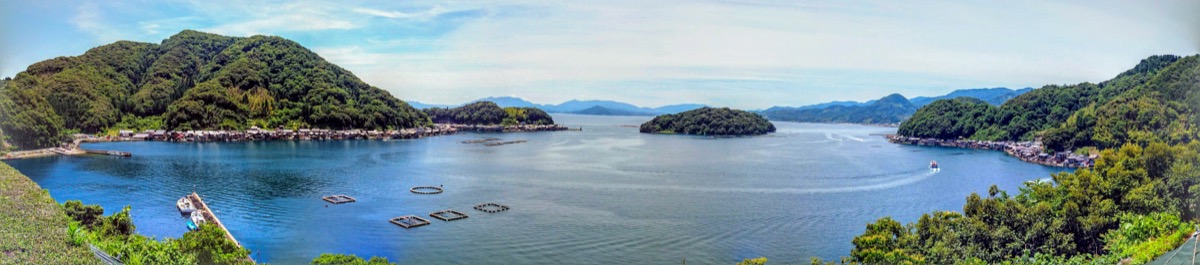
Far north of Kyoto’s crowded temple districts along the Tango Peninsula overlooking the Sea of Japan (Umi no Kyoto), Ine Bay preserves a rare architectural ecosystem: roughly 230 wooden funaya boathouses hugging five kilometers of calm crescent shoreline. Because uninhabited Aoshima Island shields the harbor entrance from northern winter gales—and Sea of Japan tides vary by scarcely 30 to 50 centimeters year-round—families were able to anchor timber Chestnut pilings directly into shallow waters to stow fishing skiffs indoors on the first floor while living in tatami rooms directly above.
Transit is straightforward even without a rental car: ride JR Limited Express Hashidate from Kyoto Station to Amanohashidate (~2 hrs, fully covered by the JR Kansai Wide Area Pass), then board the coastal Tankai Bus north (~55 mins, capped at a flat 400 JPY cash fare) directly up to Funaya-no-Sato Park overlook before walking down into the bay lanes. Community bicycles at visitor racks require a 2,000 JPY refundable cash deposit and sell out early on sunny weekends.
Respect strict resident boundaries—do NOT enter private residential boat ramps uninvited. Instead, step legally inside Funaya Koyomaru (200 JPY, closed Wednesdays), hire an intimate 8-seat fisherman’s Kaijō Sea Taxi (~1,000 JPY cash; keep snacks below head height to avoid diving black kites), sample rose-pink heirloom red-rice “Ine Mankai” sake at 1754 Mukai Shuzo, linger over matcha at charred-cedar Funaya Biyori, and watch evening departure clocks closely before the final bus back to Amanohashidate departs around 18:30.
Step-by-Step Visual Route & Timestamps
Follow our exact on-the-ground walking pace and timestamps. Click any photo or stop title to open rich multi-photo galleries, field tips, and expanded logistical guides.
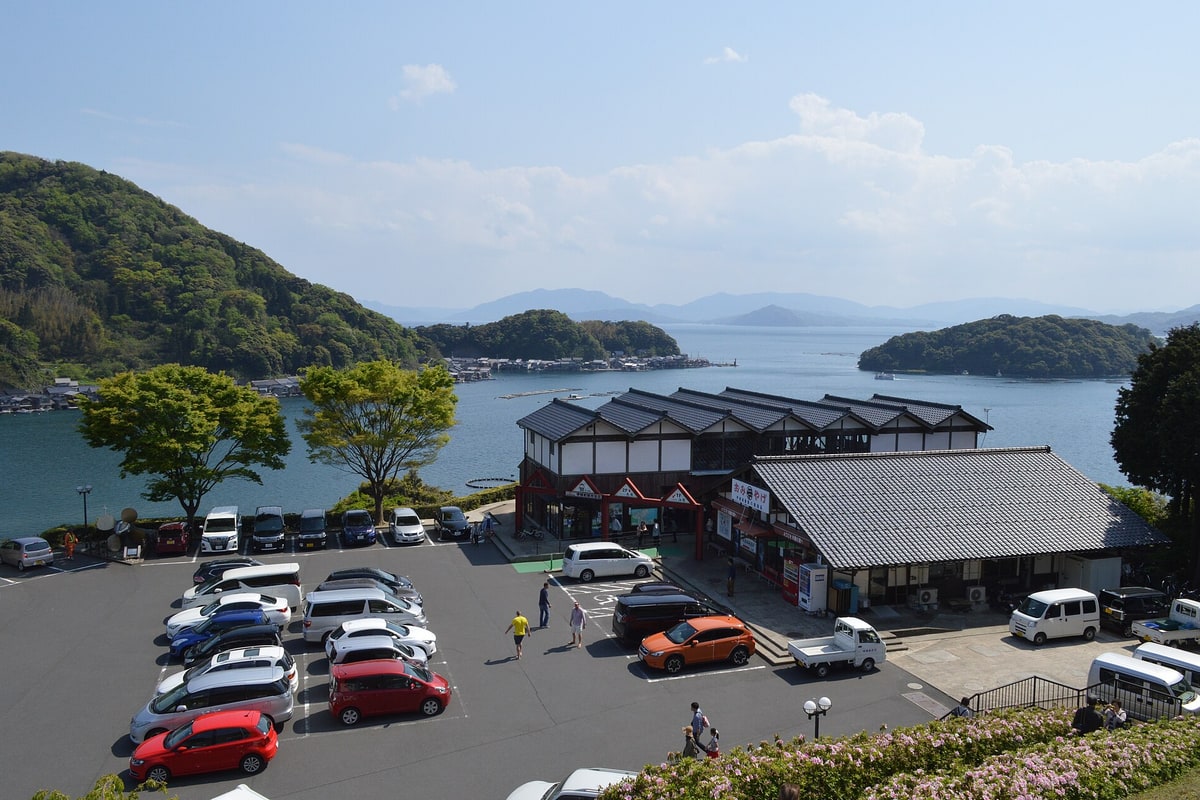
Curving timber rooftops of Ine Funaya framing calm bay waters viewed from the Funaya-no-Sato terrace. · Photo: Wikimedia Commons (CC BY-SA 4.0)
Start elevated at Michi-no-Eki Funaya-no-Sato Park before descending down the steps to sea level. From this hillside terrace, the crescent shape of Ine Bay opens cleanly below—revealing uninhabited Aoshima Island resting at the bay entrance like a rocky seawall guarding 230 cedar boathouses from Sea of Japan swells.
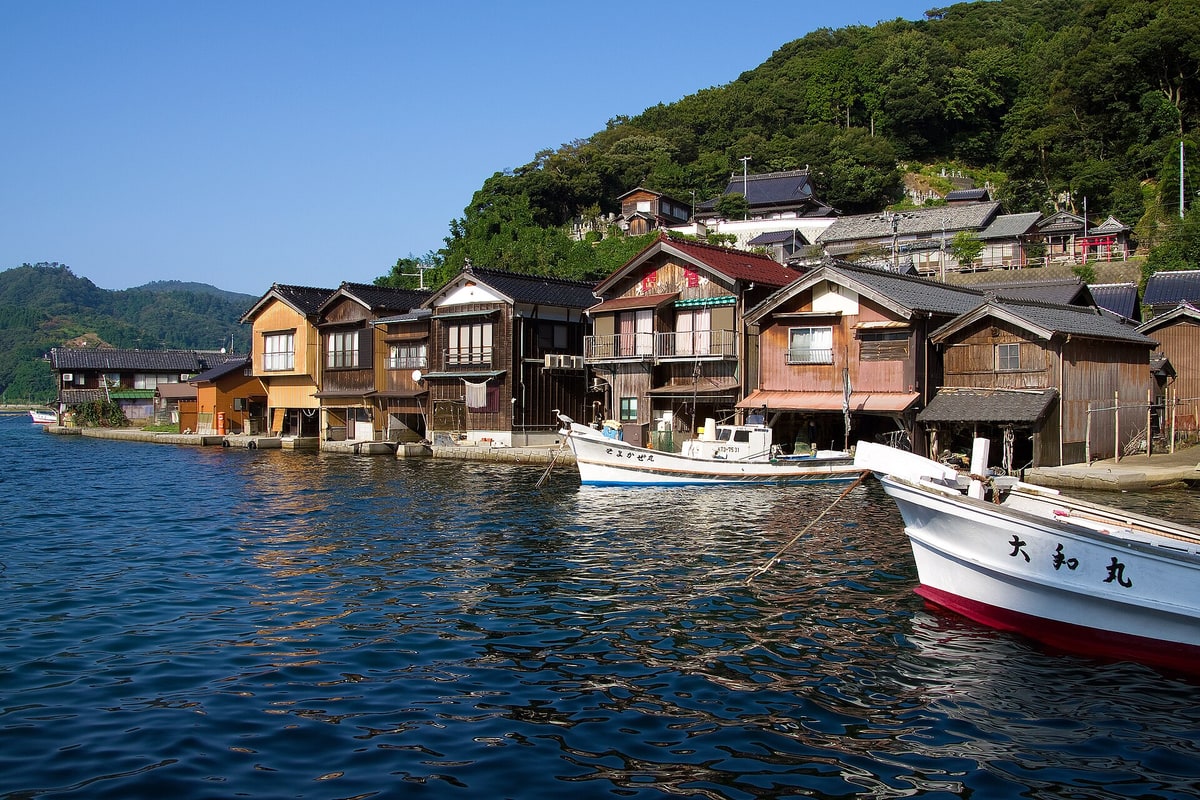
Close sea-level view from a small water taxi revealing open wooden boat garages tucked along Ine Bay. · Photo: Wikimedia Commons (CC BY-SA 4.0)
Instead of joining large two-deck tourist ferries from the outer highway pier, walk to village docks to board an 8-passenger local fisherman's water taxi ("Kaijō Taxi," such as Kameshimamaru or Seiyomaru, ~1,000 JPY cash for ~25–30 minutes). Small hulls maneuver close to open ground-floor boat garages while local skippers share bay history in lively Tango dialect.
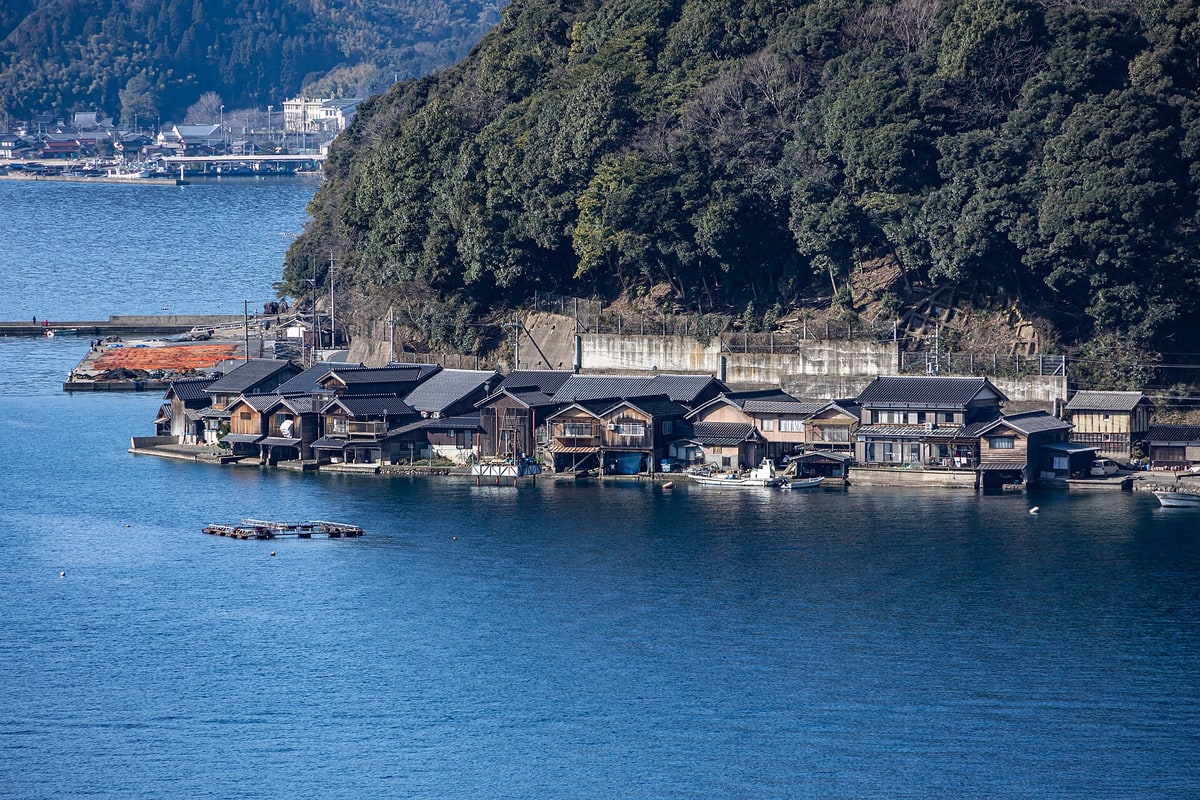
Open ground-floor timber frame inside historic Funaya Koyomaru looking out across Ine Bay. · Photo: Wikimedia Commons (CC BY-SA 4.0)
Rather than peeking uninvited through residential doors, visit publicly accessible Funaya Koyomaru (admission 200 JPY, closed Wednesdays). Step inside a restored wooden boathouse to inspect ground-floor cedar slipways, historic net-winching tackles, and upstairs tatami quarters framing Ine Bay directly beyond wooden lattice windows.
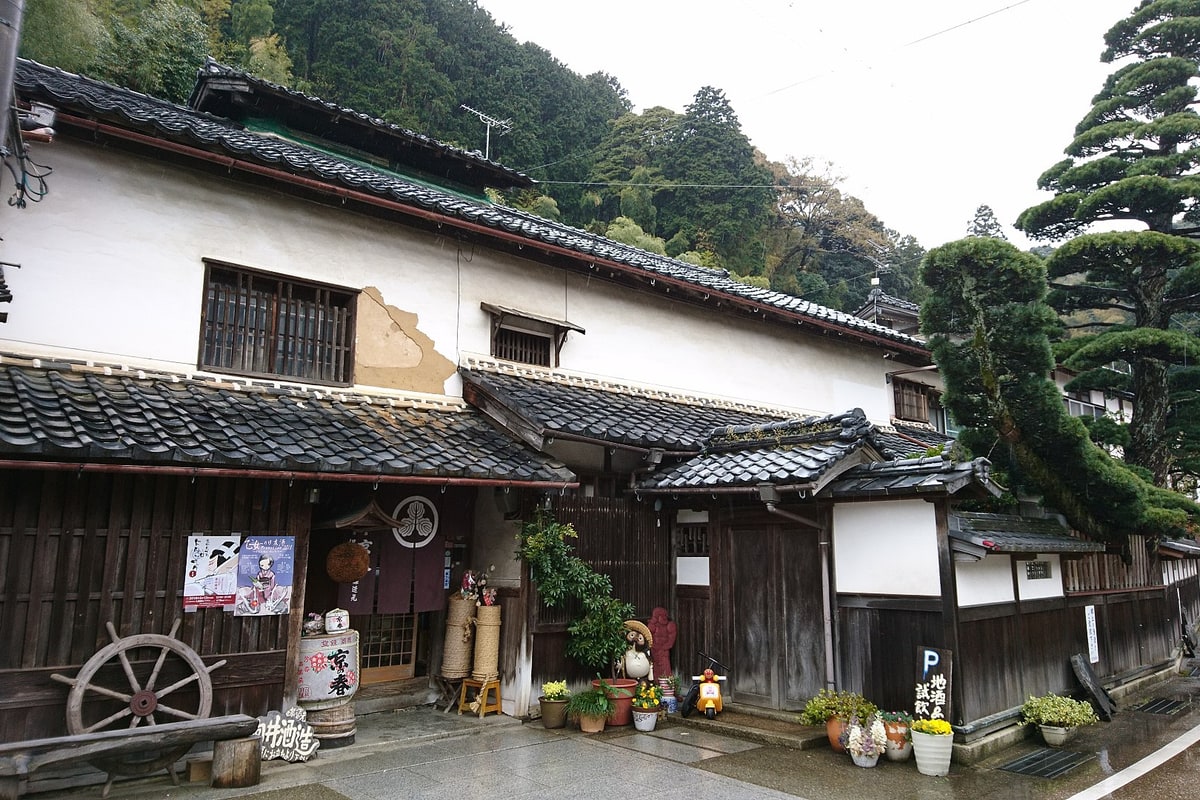
Timber storefront of Mukai Shuzo (est. 1754) marked by a traditional cedar sugidama ball on Ine's bay lane. · Photo: Wikimedia Commons (CC BY-SA 4.0)
Cycle or stroll along the waterfront lane to Mukai Shuzo, an active sakagura operating since 1754 at water's edge beneath cedar "sugidama" balls. Led by pioneering female master brewer (Toji) Kuniko Mukai, the brewery crafts Kyoto's celebrated "Ine Mankai"—brewed with ancient heirloom red-purple rice ("murasakikome") into an aromatic, lightly tart rose-pink sake.
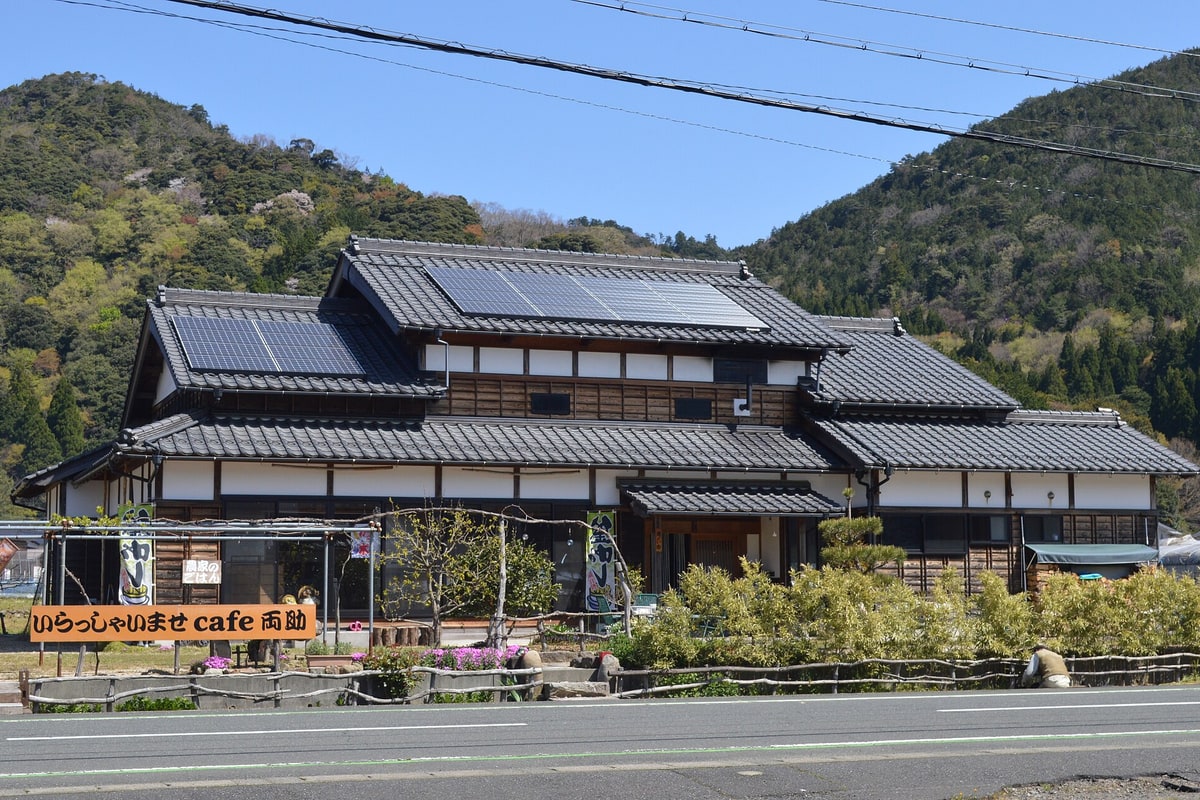
Low-slung charred-cedar pavilions of Funaya Biyori resting beside calm harbor waters. · Photo: Wikimedia Commons (CC BY-SA 4.0)
Pause late afternoon along the revitalized timber promenade at Funaya Biyori, perched right above Ine's eastern cove beside calm anchored boats. Order Uji matcha desserts or drip coffee at INE CAFE's water-facing deck while watching sea birds glide across bay reflections toward nearby timber eaves.
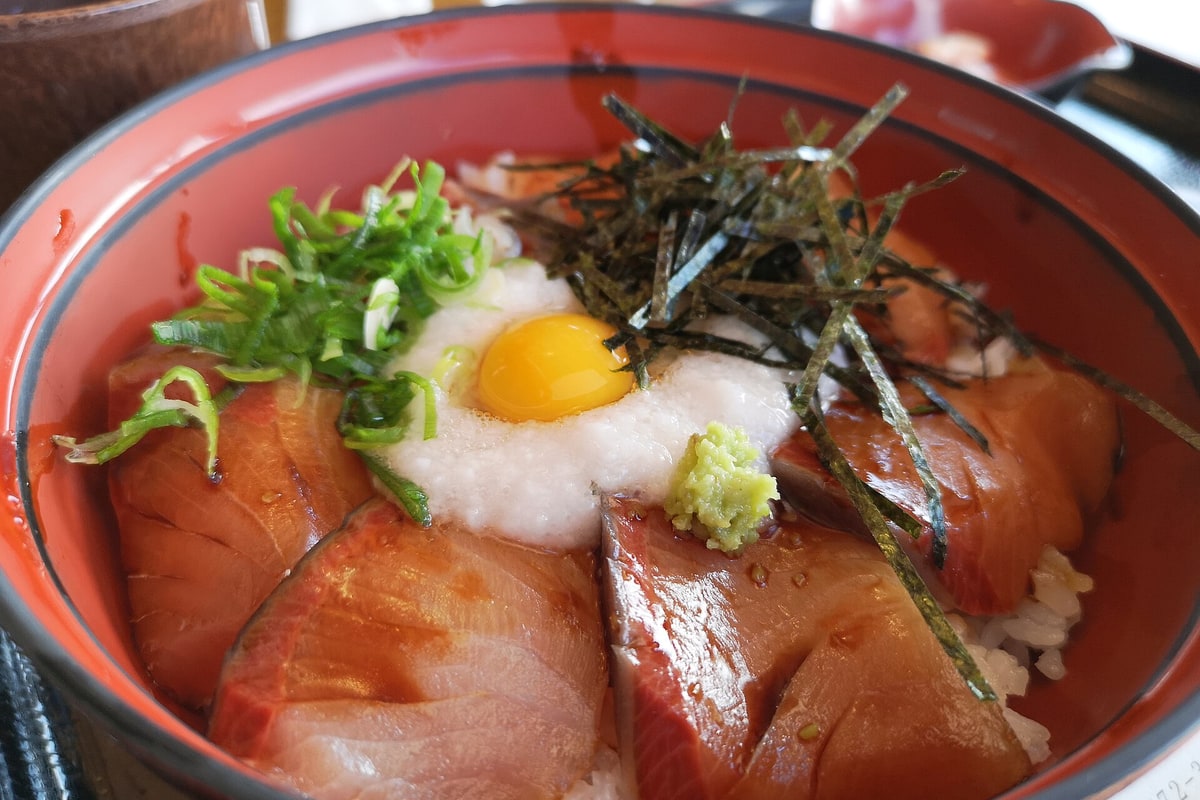
Seasonal wild Ine Buri (yellowtail) sashimi rice bowl ("Buri-don") served fresh from local stationary net catches. · Photo: Wikimedia Commons (CC BY-SA 4.0)
Once afternoon buses carry day visitors back toward Amanohashidate around 17:30, Ine's harbor road returns to quiet maritime rhythms. Drop into a local seafood restaurant (reservations advisable after dark) for fresh set-net seasonal catch—headlined from November through February by sweet, cold-water "Ine Buri" yellowtail bowls ("Buri-don") or shabu-shabu before watching evening lights shimmer across calm harbor coves.
Interactive Location & Route Map
Many rural Asian landmarks don’t appear when searching English spellings in Google Maps. Click any numbered stop on the map below or tap the button above to open the exact latitude/longitude pin on your phone.
Frequently Asked Questions
How do JR Passes and public buses cover the journey from Kyoto to Ine Funaya?
The JR Kansai Wide Area Pass covers express trains all the way from Kyoto Station directly to Amanohashidate Station (~2 hrs on Limited Express Hashidate via Fukuchiyama). Outside Amanohashidate Station, board the local Tankai Bus north for ~55 minutes—this coastal bus is NOT covered by JR Passes and uses a capped cash fare of 400 JPY one-way (or separate Tango pass).
Are free community bicycles completely free without requirements, and are funayas open inside?
Two crucial distinctions: first, community rental bikes at tourist spots normally require a refundable 2,000 JPY cash deposit (and must be returned strictly to designated stations, not left on private property); second, over 95% of funayas are active private homes—strictly forbidden to enter uninvited. To tour an authentic interior legally, pay 200 JPY at Funaya Koyomaru (closed Wednesdays!).
Field Verification & Non-Sponsored Standards
This travel dispatch was researched exclusively through public transport (trains, local branch buses, ferries) and foot exploration. Uncharted Asia accepts zero commercial sponsorships, free stays, or sponsored meals. Timetables, fare gates, and mountain trail conditions are independently verified against physical operator timetables. Learn more in our Editorial Methodology.