Karuizawa Plateau Architecture & Forest Route: 3 Days from Tokyo
Sitting at 1,000 meters below Mount Asama, Karuizawa pairs Kendrick Kellogg's organic stone architecture and Yukawa River boardwalks with Meiji timber heritage and Shiraito Falls groundwater springs.
Field Warnings & Critical Traps to Avoid
Highland evening cold, e-bike stock on weekends, and Stone Church rules.
Sharp Temperature Drop After 16:30 at 1,000 m Elevation
At roughly 1,000 meters above sea level, Karuizawa cools rapidly once the sun dips after 16:30, often running 8–10°C cooler than central Tokyo. Bring a windbreaker or light layer even on clear summer days.
Rent E-Bikes Before 09:30 on Weekends
Roads climb gently northward from Karuizawa Station toward Kyu-Karuizawa and Naka-Karuizawa, so electric-assist bikes sell out quickly by late morning on sunny weekends and autumn holidays.
Stone Church Wedding Closures & Strict Total Photography Ban
Stone Church closes to casual visitors during private wedding ceremonies, especially on Saturdays and Sundays. Outside weddings (roughly 10:00–17:00 on weekdays), public entry is free, but all photography, video, and phone use inside the chapel sanctuary are strictly prohibited.
Roughly 65 to 75 minutes northwest of Tokyo Station via the Hokuriku Shinkansen—specifically Asama or stopping Hakutaka services, as the fastest Kagayaki trains do not stop—Karuizawa sits at 1,000 meters elevation along the wooded lower slopes of Mount Asama in Nagano Prefecture. Introduced as a summer mountain retreat in the late 1880s by Canadian missionary Alexander Croft Shaw, the plateau combines Meiji-era Western timber architecture, Showa-era bakery and coffee shops, and modern organic structures linked cleanly by electric-assist bicycles, local rail, and mountain buses.
Spreading the visit over three days avoids cramming distances across town. Spend Day 1 in Naka-Karuizawa’s Hoshino Area visiting Kendrick Kellogg’s 1988 granite-and-glass Stone Church (remembering photography is strictly banned inside) and the spring-elm decks of Harunire Terrace along the Yukawa River. Dedicate Day 2 to cycling: reach spring-fed Kumoba Pond before 08:00 AM for still water reflections, pedal up larch-lined Mikasa-dori to the restored 1906 Former Mikasa Hotel (reopened in October 2025; 1,000 JPY entry) and local stone-ground soba houses, and browse Kyu-Karuizawa Ginza before shops close around dusk. On Day 3, ride the Kusakaru Kotsu bus (~720 JPY) from the station north exit to 70-meter-wide Shiraito Falls, where Mount Asama groundwater filters through volcanic rock for six years before emerging into the cool mountain air.
Step-by-Step Visual Route & Timestamps
Follow our exact on-the-ground walking pace and timestamps. Click any photo or stop title to open rich multi-photo galleries, field tips, and expanded logistical guides.
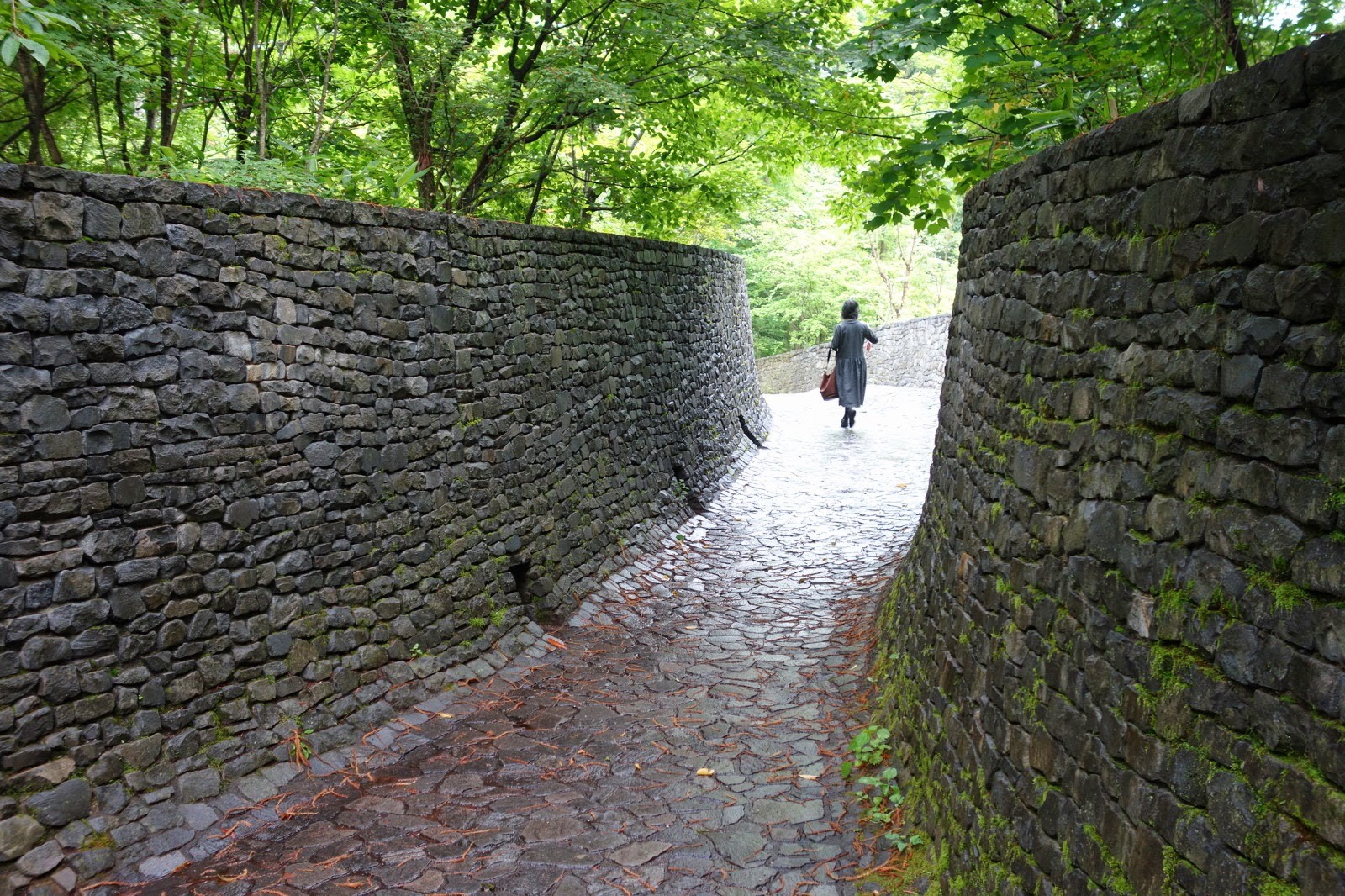
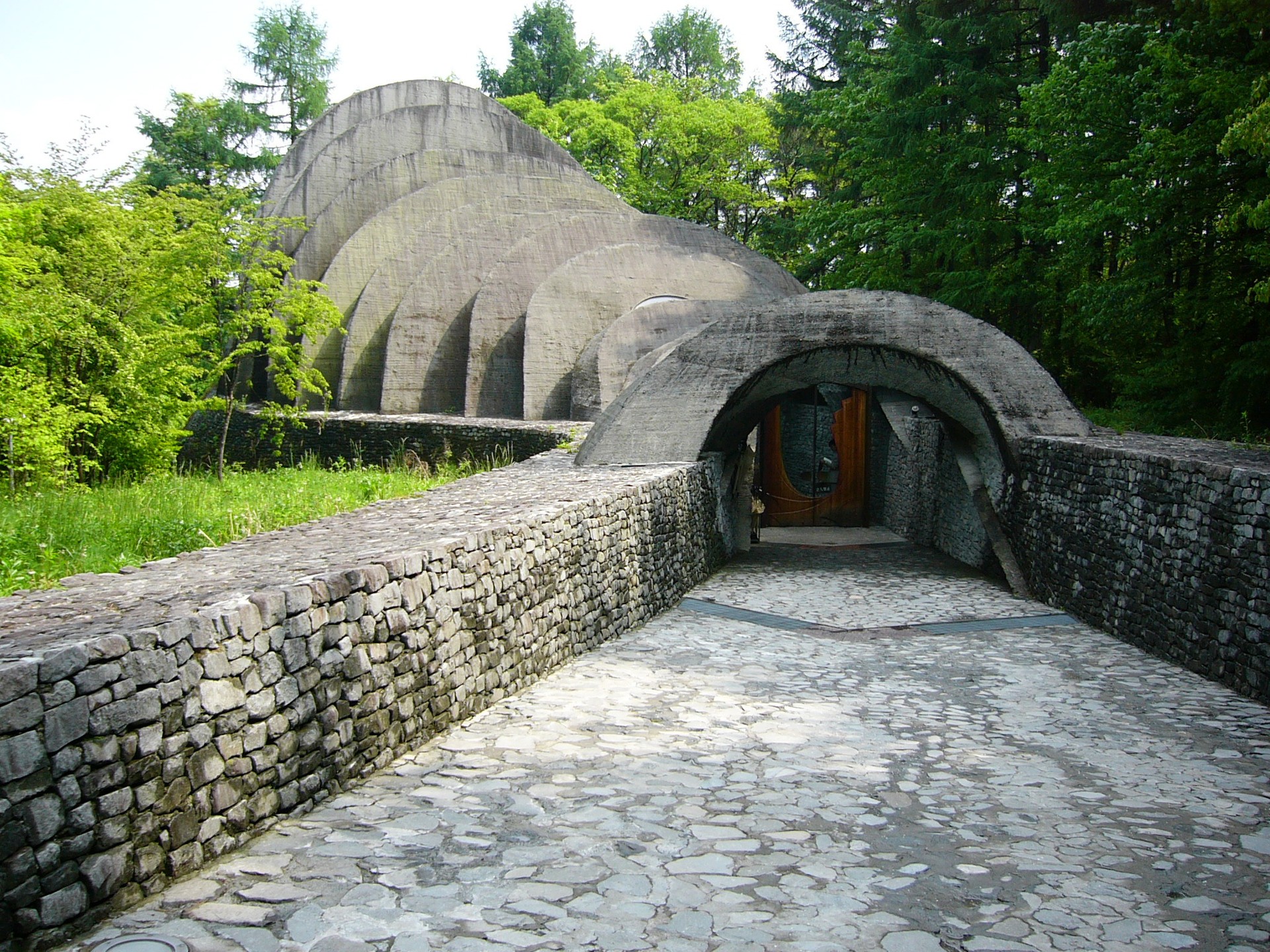
Curved granite and glass vaulting of Kendrick Kellogg's 1988 Stone Church set into the woods of Naka-Karuizawa. · Photo: 663highland (CC BY-SA 3.0 via Wikimedia Commons)
Check into town after arriving on the afternoon Shinkansen and cycle or take the Shinano Railway to Naka-Karuizawa to visit Kendrick Kellogg's 1988 Stone Church. Thirteen irregular granite arches curve out of the wooded hillside beside narrow skylights and an interior stone water channel; entry is permitted outside wedding bookings, with strict silence and no interior photography.
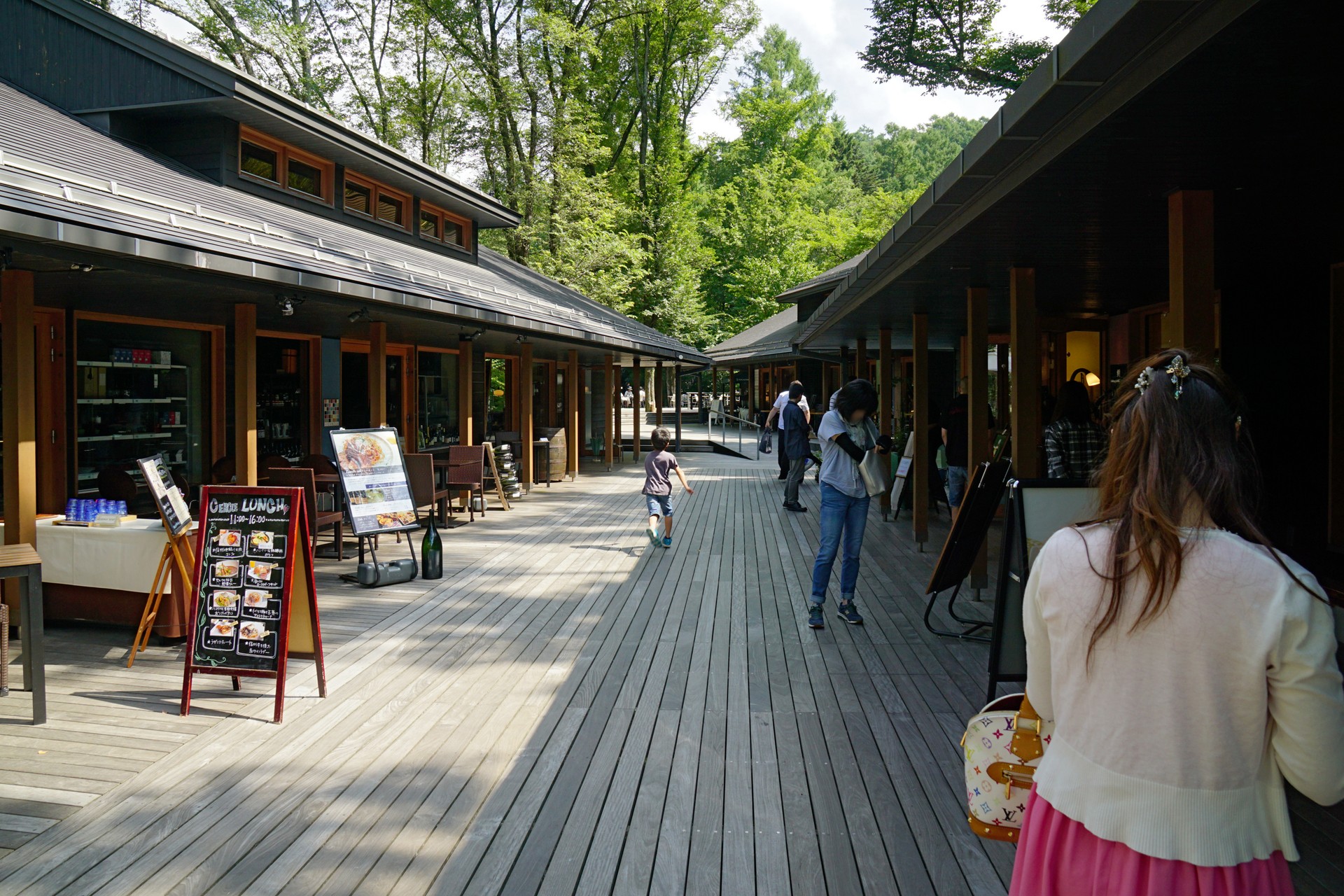
Connected timber decks built around mature spring elm trunks above the Yukawa River at Harunire Terrace. · Photo: Wikimedia Commons (CC BY-SA 4.0)
Walk 10–15 minutes downhill along the wooded road from Stone Church to Harunire Terrace, where dark wooden decks are built around more than 100 native spring elm trees beside the Yukawa River. Stop for coffee at Maruyama Coffee, local bakery pastries, or casual dinner before evening breeze settles in.
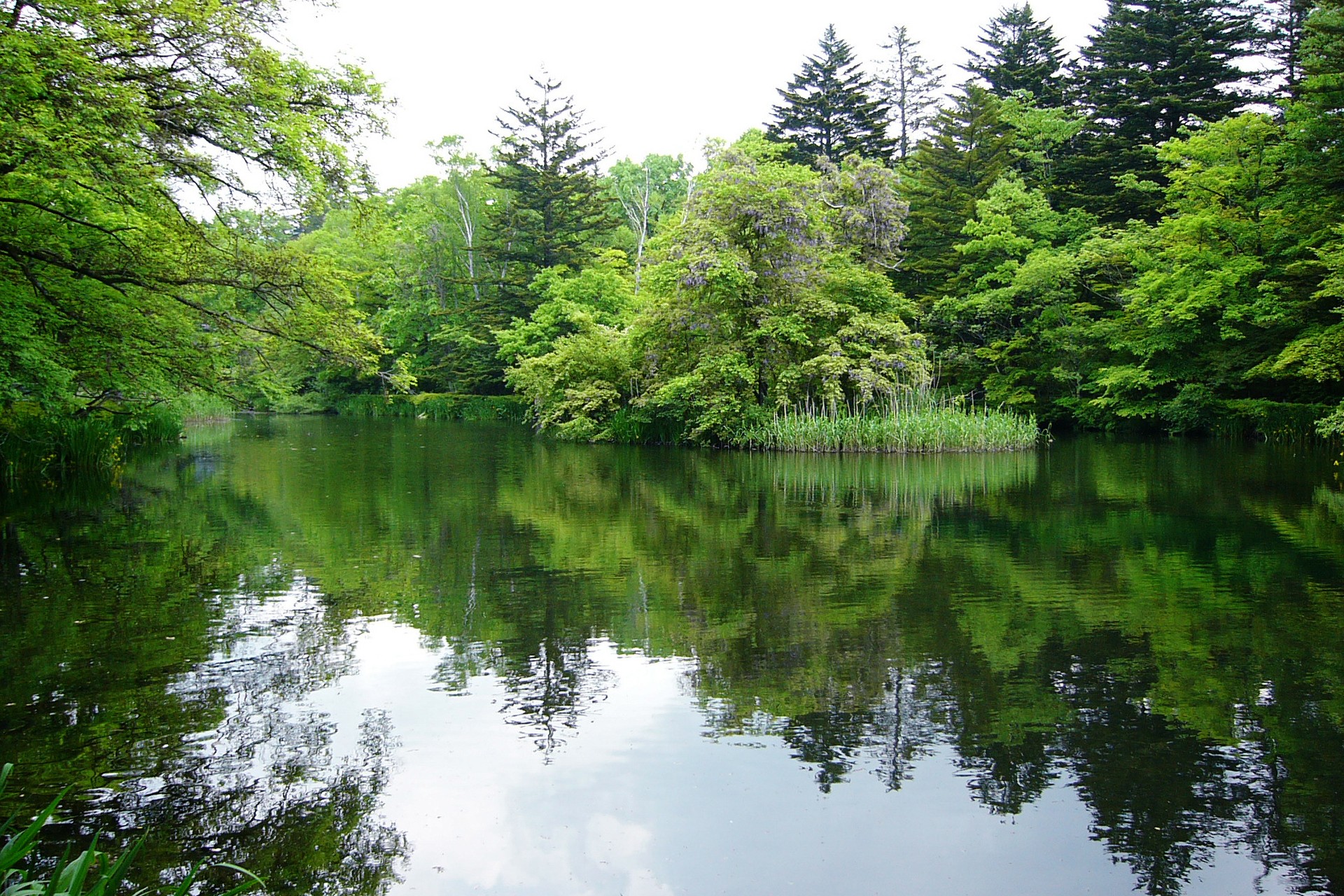
Early-morning water reflections across spring-fed Kumoba Pond bordered by Japanese maples and larches. · Photo: Wikimedia Commons (CC BY-SA 4.0)
Cycle to Kumoba Pond before 08:00 AM, when wind is usually still and tourist coaches have not yet arrived. Fed by clear Ozensui groundwater springs, the narrow pond sits inside a flat 20–25 minute loop trail framed by Japanese maples and larches; note there is no dedicated car parking on site and autumn peak periods bring road restrictions around the pond.
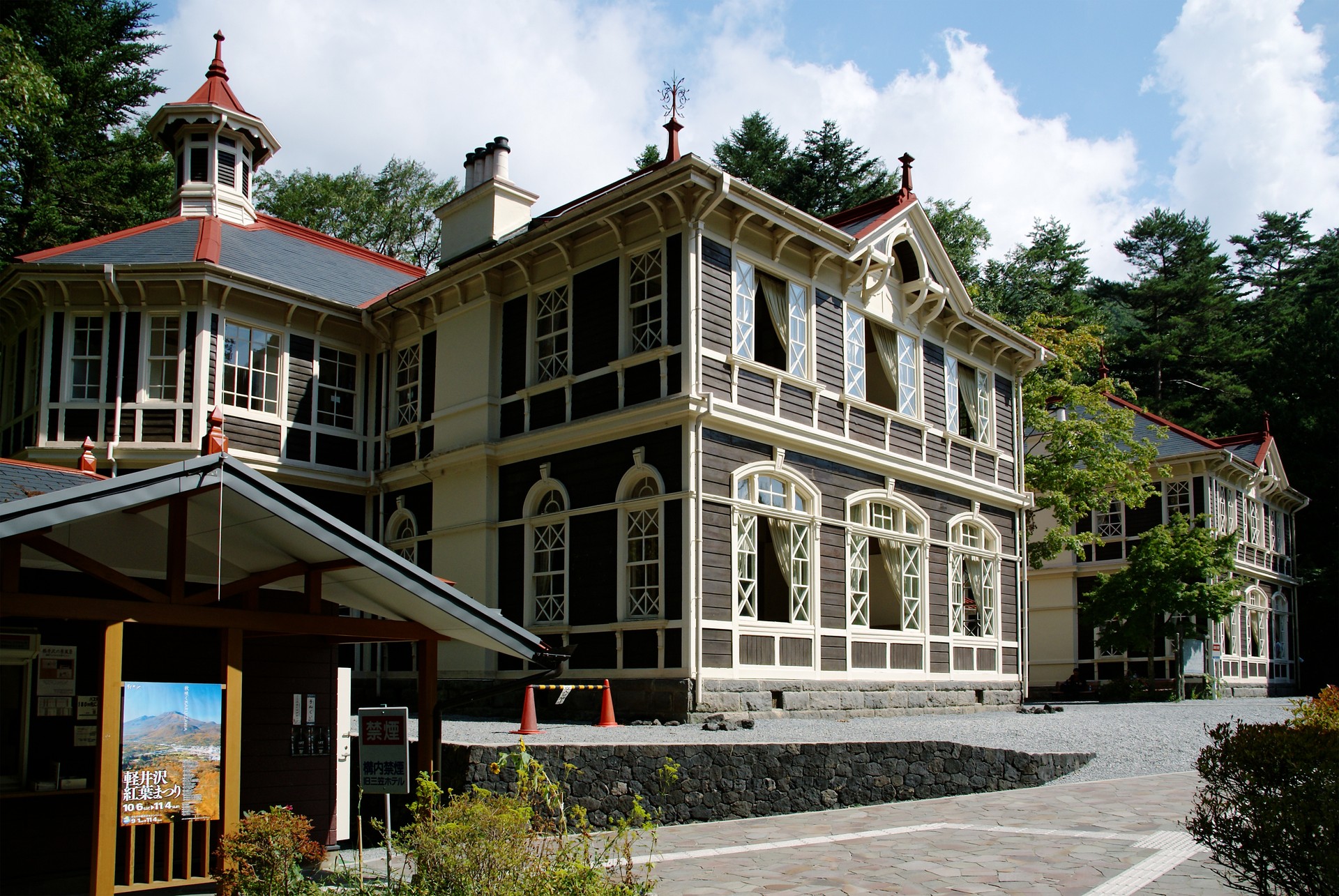
Restored 1906 timber Western-style facade of the Former Mikasa Hotel along Mikasa-dori. · Photo: Wikimedia Commons (CC BY-SA 3.0)
Ride north up the Japanese larch-lined Mikasa-dori avenue to the Former Mikasa Hotel, built in 1906 by Japanese master carpenters in Western hotel style and newly reopened in October 2025 after multi-year seismic restoration (adult entry 1,000 JPY). For lunch, stop at one of Kyu-Karuizawa's traditional hand-rolled buckwheat soba houses—many serve limited daily batches of ten-wari soba with walnut dipping sauce (kurumi-dare).
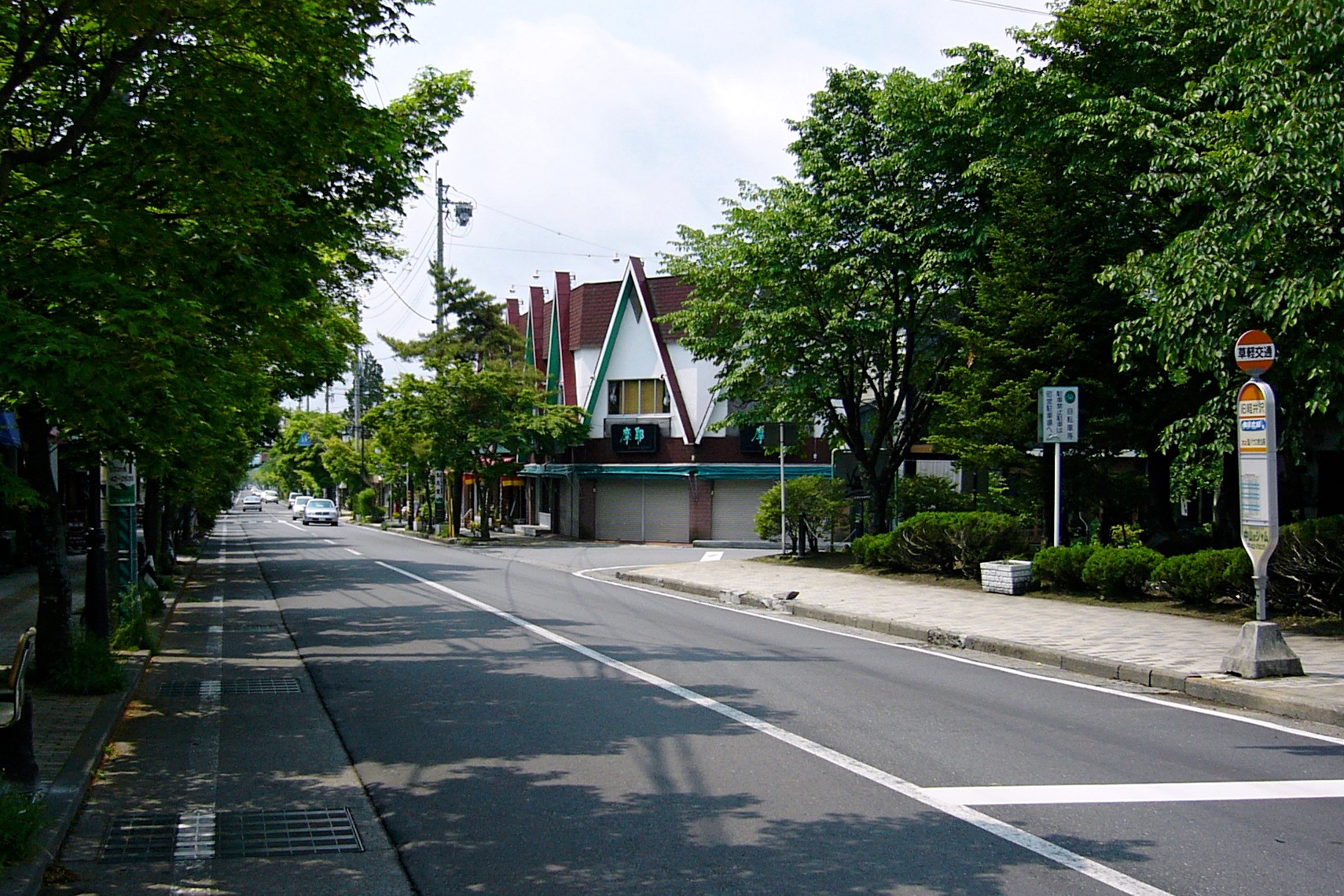
Historic shops and brick-paved pedestrian lane through the heart of Kyu-Karuizawa Ginza. · Photo: Wikimedia Commons (CC BY-SA 4.0)
Return down Mikasa-dori to park bikes near the entrance of Kyu-Karuizawa Ginza. Originally an Edo-era Nakasendo post town before Canadian missionary A.C. Shaw popularized it as a summer retreat in the 1880s, the lane retains long-running fruit jam shops, siphon kissaten coffee houses, and French Bakery (founded 1951), famously frequented by John Lennon in the 1970s.
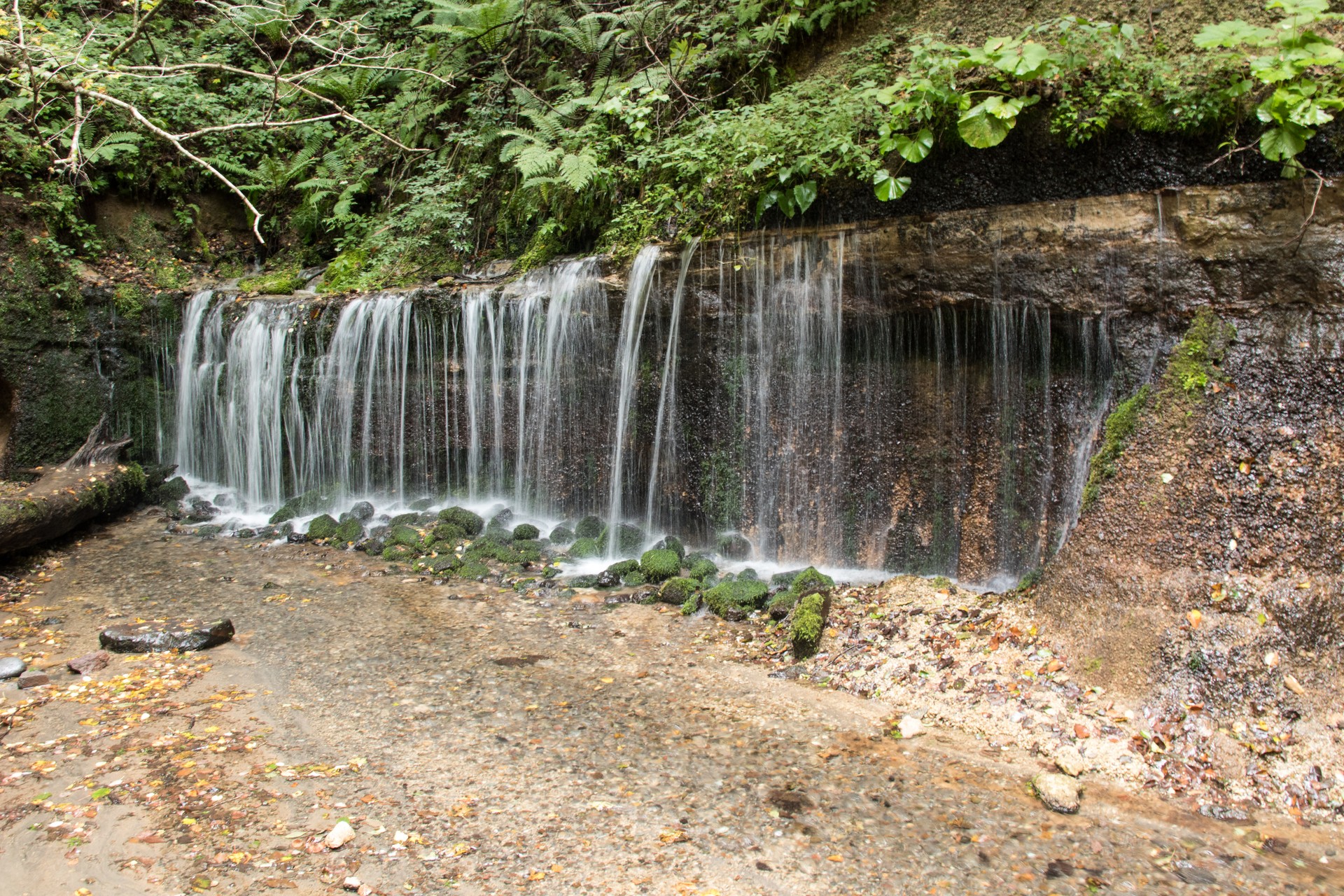
The 70-meter curved black volcanic rock face of Shiraito Falls weeping crystal groundwater springs. · Photo: Wikimedia Commons (CC BY-SA 4.0)
On the final morning, board a Kusakaru Kotsu bus from Karuizawa Station North Exit up the forested toll road to Shiraito Falls. Unlike river-fed waterfalls, this 3-meter-high, 70-meter-wide curved black volcanic rock face discharges Mount Asama rainwater that has filtered underground for roughly six years, keeping the curtain clear even after storms at a steady ~11.8°C.
Interactive Location & Route Map
Many rural Asian landmarks don’t appear when searching English spellings in Google Maps. Click any numbered stop on the map below or tap the button above to open the exact latitude/longitude pin on your phone.
Frequently Asked Questions
Which Shinkansen trains stop at Karuizawa from Tokyo Station?
No—the fastest "Kagayaki" trains bypass Karuizawa completely. Board either an all-stops "Asama" train or a "Hakutaka" service scheduled to stop at Karuizawa (~65–75 minutes from Tokyo Station).
How should I get around Karuizawa without a rental car?
Rent an electric-assist bicycle outside Karuizawa Station North Exit (~1,500–2,500 JPY/day) to cover Kumoba Pond, Kyu-Karuizawa, and Former Mikasa Hotel easily, use the Shinano Railway for Naka-Karuizawa, and take Kusakaru Kotsu buses (~720 JPY) up to Shiraito Falls.
When is the best time to see autumn colors at Kumoba Pond?
Peak autumn colors normally arrive between mid-October and early November, when crimson maples and golden Japanese larches frame the morning waters of Kumoba Pond.
Field Verification & Non-Sponsored Standards
This travel dispatch was researched exclusively through public transport (trains, local branch buses, ferries) and foot exploration. Uncharted Asia accepts zero commercial sponsorships, free stays, or sponsored meals. Timetables, fare gates, and mountain trail conditions are independently verified against physical operator timetables. Learn more in our Editorial Methodology.