Iya Valley & Kazurabashi Vine Bridge: Crossing Shikoku’s Mountain Gorge
Suspended 14 meters over clear gorge rapids in Tokushima, cross the 45-meter wild-vine Iya Kazurabashi one-way from west to east before dining on charcoal-grilled river fish and Iya soba.
Field Warnings & Critical Traps to Avoid
Wide wooden floor gaps, treacherous single-lane Route 439, and winter Oku-Iya bus pauses.
Wide 10–15 cm Floor Slat Gaps & Mandatory Footwear Rules
Rough-hewn round cedar cross-poles ("sanagi") forming the Kazurabashi walkway leave 10 to 15 cm open gaps directly above the rocky Iya River 14 meters below. High heels, sandals without heel straps, and loose flip-flops are hazardous—wear laced sneakers and hold small children tightly.
Narrow One-Lane Cliff Roads (Prefectural Route 32 & National Route 439)
Reaching outer valley overlooks and deep Oku-Iya Double Vine Bridges follows Prefectural Route 32 and notorious single-lane National Route 439 ("Yokoku" cliff road). Approaching buses or timber trucks around blind bends requires calmly reversing dozens of meters beside steep unfenced canyon drops to pullouts.
Winter Bus Suspension to Deeper Oku-Iya (December–March)
While the primary Nishi-Iya Kazurabashi runs year-round buses from JR Oboke (barring heavy snowstorms), seasonal tourist buses pushing further up into deep Oku-Iya cease entirely from December through March due to ice and narrow snow closures.
Carved deep through Shikoku’s folded schist mountains in Tokushima Prefecture, the Iya Valley served for centuries as one of Japan’s hardest-to-reach highland refuges—traditionally linked to fugitive Heike clan samurai fleeing defeat after 1185. Suspended 14 meters over churning boulders of the Iya River, the 45-meter Iya Kazurabashi stays true to its defensive myth: rebuilt every three years using roughly five tons of wild Hardy kiwi vines (shirakuchikazura) hand-lashed around discreet inner steel safety cables.
Travelers without cars reach the main Nishi-Iya vine bridge easily year-round by taking JR Limited Express Nanpu to JR Oboke Station and catching a Shikoku Kotsu bus (~22–25 mins, ~670 JPY cash one-way; larger regional express hub JR Awa-Ikeda sits ~60 mins away). Pushing an extra hour east toward the remote Double Vine Bridges of Oku-Iya requires extreme care: narrow, unguarded National Route 439 and Prefectural Route 32 demand tense cliffside reversing around blind bends, while seasonal Oku-Iya connecting buses run mainly on April–November weekends and halt altogether from December through March.
Pay 550 JPY cash at the west booth and cross strictly one-way from West to East. Wear flat, laced sneakers across the widely spaced wooden cross-poles (sanagi, leaving 10–15 cm gaps staring straight down to river boulders), strap phones safely against drops, descend to the free downstream gravel riverbed for unobstructed bridge photos, and warm up at riverside charcoal hearths over salt-grilled ayu sweetfish, Dekomawashi yuzu-miso skewers, and short-cut 100% buckwheat Iya Soba.
Step-by-Step Visual Route & Timestamps
Follow our exact on-the-ground walking pace and timestamps. Click any photo or stop title to open rich multi-photo galleries, field tips, and expanded logistical guides.
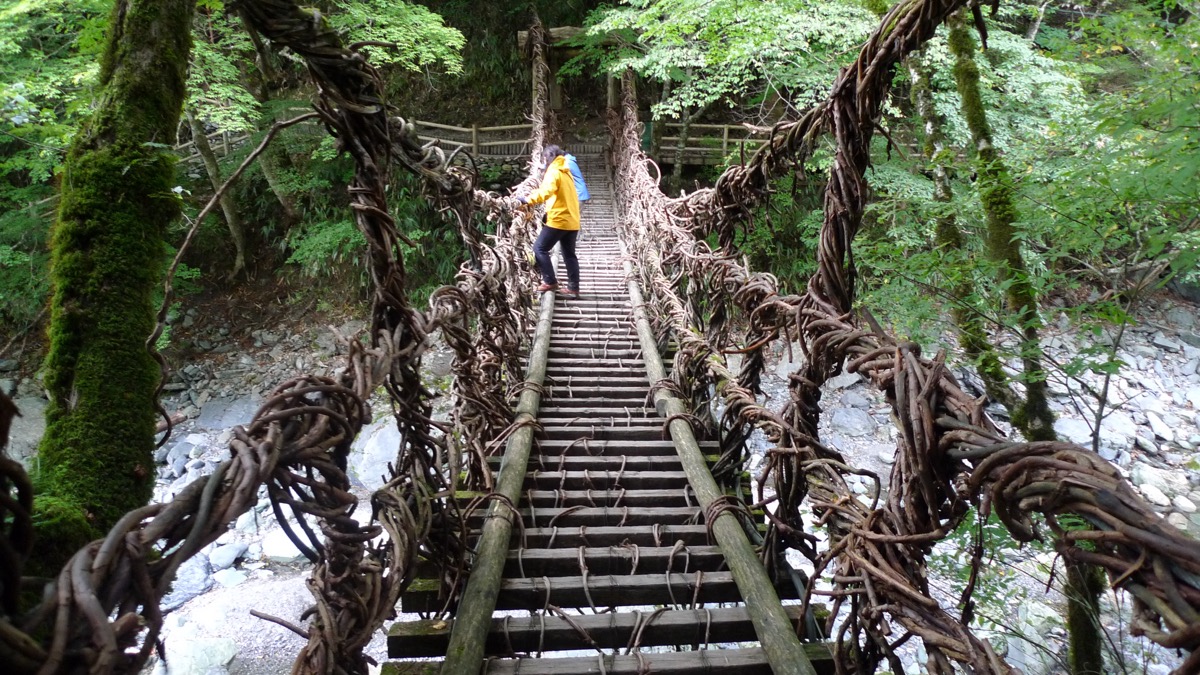
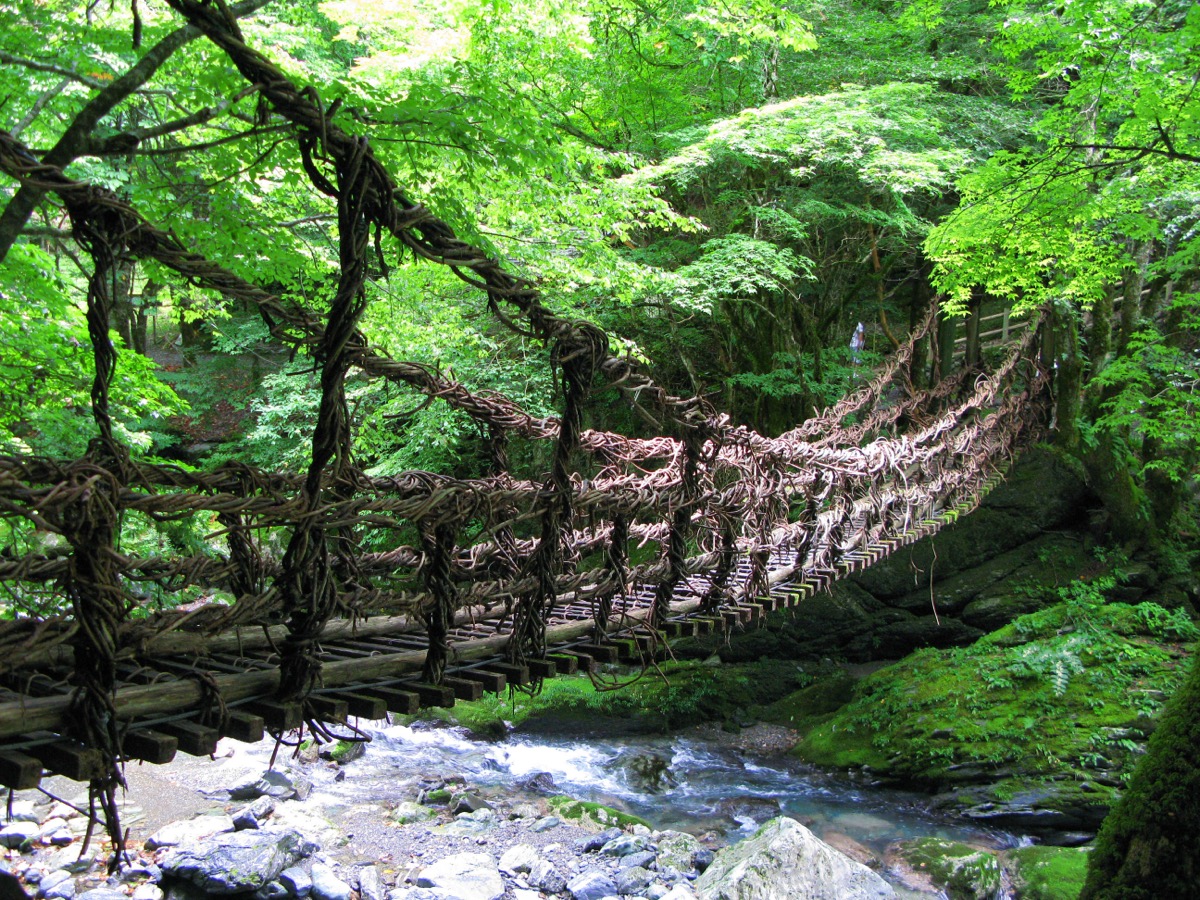
45-meter Iya Kazurabashi bridge woven from wild Hardy kiwi vines above rocky river pools. · Photo: Wikimedia Commons (CC BY-SA 4.0)
Step down beside the Kazurabashi Yumebutai bridge approach to view the 45-meter-long, 2-meter-wide Iya Kazurabashi spanning 14 meters above crystal boulders of the Iya River. Woven by local master builders every three years using roughly five tons of wild Hardy kiwi vines ("shirakuchikazura") wrapped securely around discreet inner steel cables, crossings move strictly one-way from West to East.
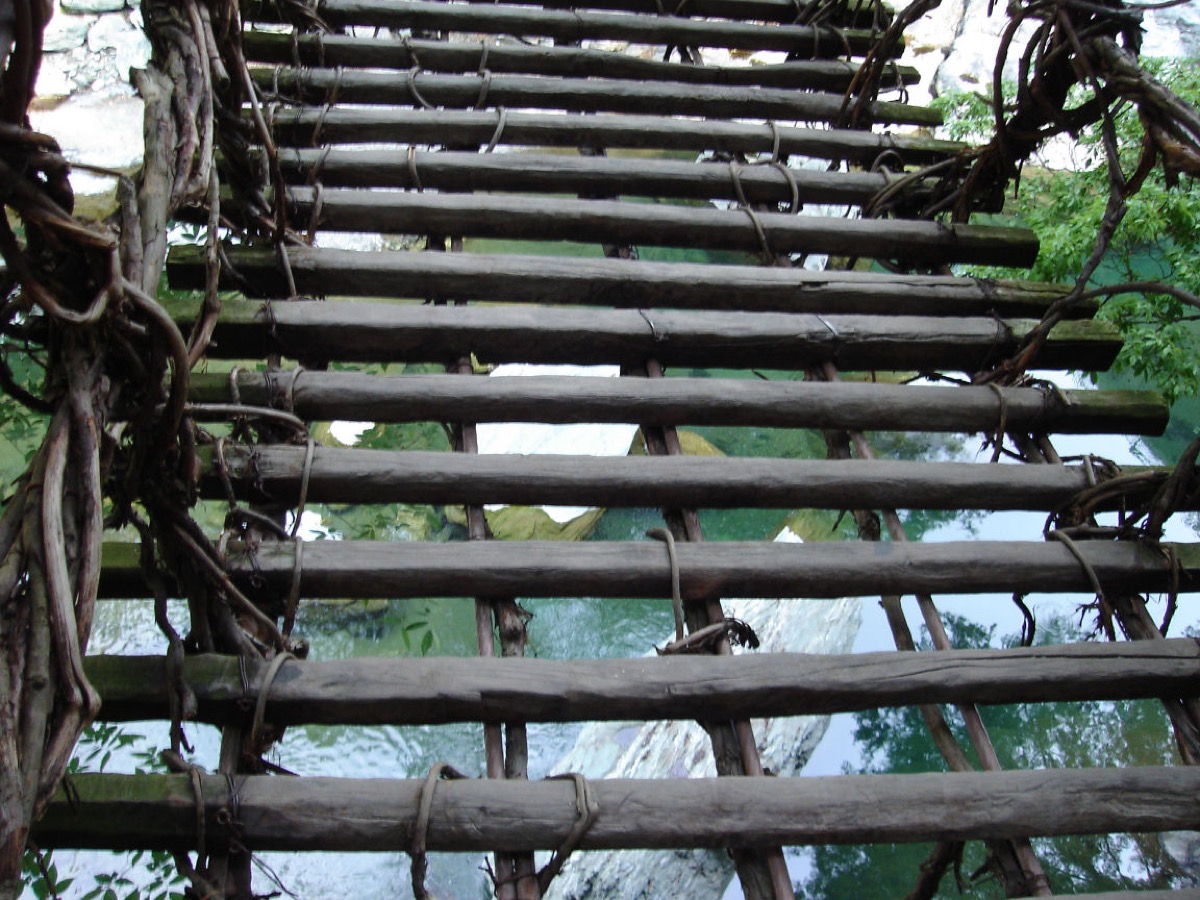
Looking straight across spaced rough-hewn cedar slats ("sanagi") bound with wild vines above Iya Gorge. · Photo: Wikimedia Commons (CC BY-SA 4.0)
Grip thick woven vine rails firmly on both sides while stepping carefully across spaced rough-hewn wooden slats known locally as "sanagi" (not solid decking), separated by 10 to 15 cm open slots directly above clear rapids. Pause smoothly along the eastern riverbank exit beside Biwa Falls or walk down to the concrete bridge downstream for side-angle photography.
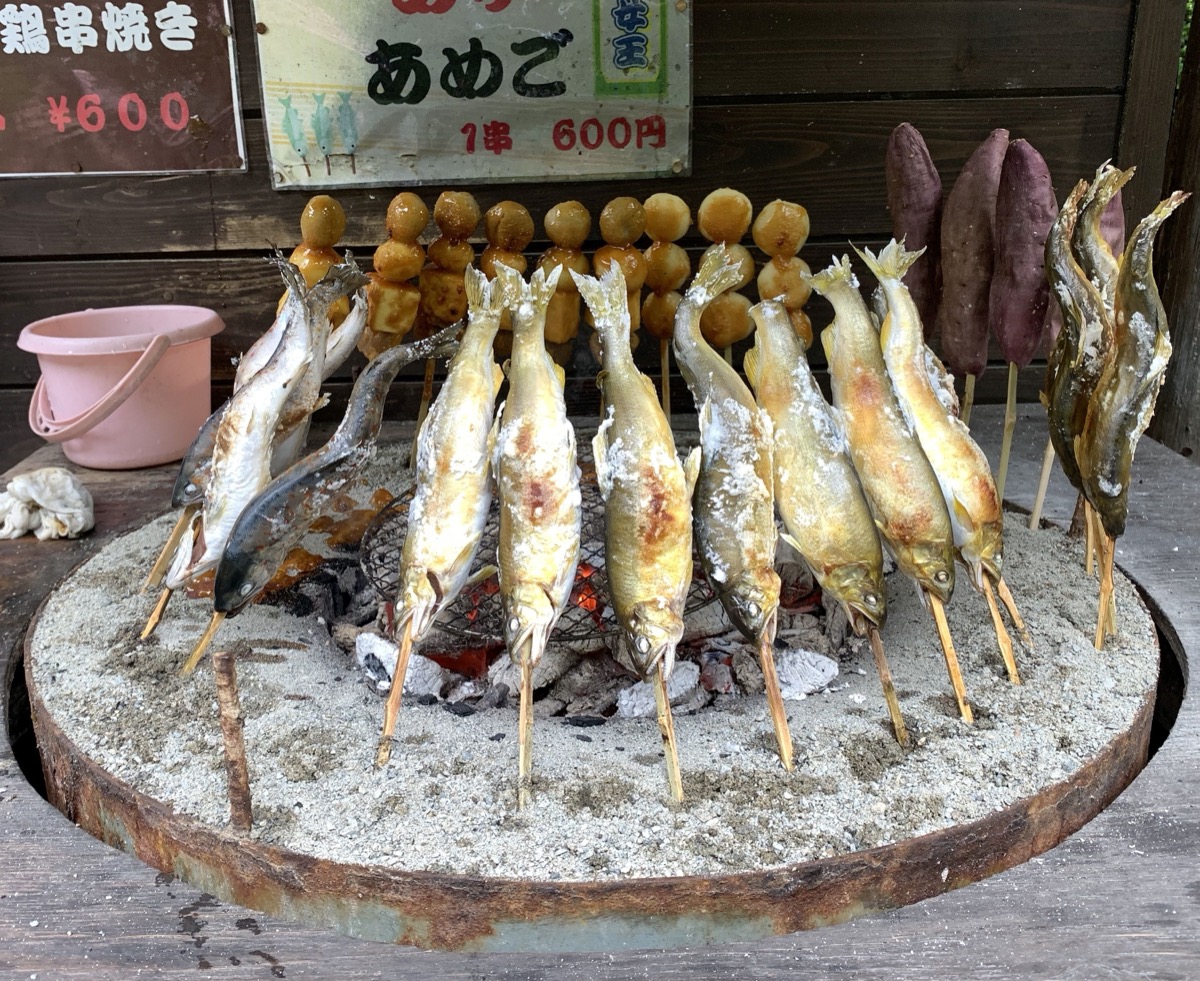
Salt-crusted ayu sweetfish skewered upright around glowing binchotan charcoal inside an Iya riverside hearth. · Photo: Wikimedia Commons (CC BY-SA 4.0)
Wrap up the morning bridge circuit at a riverside thatched teahouse beside the east exit lane. Pull up seats round glowing charcoal fireboxes where skewered river ayu sweetfish (and native amago mountain trout) bake crisp in coarse sea salt alongside 300-year-old "Dekomawashi" miso skewers and short, rustic 100% buckwheat Iya Soba noodles.
Interactive Location & Route Map
Many rural Asian landmarks don’t appear when searching English spellings in Google Maps. Click any numbered stop on the map below or tap the button above to open the exact latitude/longitude pin on your phone.
Frequently Asked Questions
What direction do you walk across Iya Kazurabashi, and is it safe?
Crossing traffic flows strictly one-way from WEST to EAST (entering from the riverside ticket booth side and exiting toward Biwa Falls and the hearth cafes). The bridge is structurally very safe—modern engineering threads concealed high-strength steel cables inside the natural vine handrails and main suspension cords—but the 10–15 cm open gaps between "sanagi" wooden slats require grippy flat sneakers and steady nerves.
How can I visit Oku-Iya Double Vine Bridges further up the gorge without a rental car?
Reaching the main Nishi-Iya Kazurabashi is easy year-round via Shikoku Kotsu buses from JR Oboke (~22–25 mins, ~670 JPY). Reaching remote Oku-Iya Double Vine Bridges ("Husband & Wife Bridges" + Yaen cable box) one hour deeper along narrow Route 439 is far trickier: seasonal connecting buses operate mainly on weekends and holidays from April to November—and suspend completely December through March.
Field Verification & Non-Sponsored Standards
This travel dispatch was researched exclusively through public transport (trains, local branch buses, ferries) and foot exploration. Uncharted Asia accepts zero commercial sponsorships, free stays, or sponsored meals. Timetables, fare gates, and mountain trail conditions are independently verified against physical operator timetables. Learn more in our Editorial Methodology.