Boseong Daehan Dawon: Cedar Avenues & Terraced Tea Hills Above Deukryang Bay
Walk beneath 1957 Japanese cryptomeria windbreaks and climb terraced green tea rows overlooking Deukryang Bay in South Korea’s primary tea-growing county.
Field Warnings & Critical Traps to Avoid
Steep unpaved summit slopes, sparse rural return taxis, and seasonal winter pruning.
Steep Unpaved Dirt and Stone Ascent to the Sea Observatory
While the entrance cedar boulevard and lower tea terraces feature firm, gradual walkways, the upper climb past the Central Observatory up to the 300-meter-high Sea Observatory turns steep and unpaved with loose gravel. Wear lugged athletic shoes rather than flat dress shoes or sandals.
Sparse Exit Taxis & Infrequent Rural Bus Schedules
Taxis rarely wait outside the tea plantation gate, and ride-hailing apps frequently struggle to assign drivers in rural Boseong. Photograph the green county bus return timetable at the stop upon arrival so you avoid a 1–2 hour roadside wait.
Seasonal Landscape Difference Between Spring Shoots and Winter Trim
Lush bright green shoots photograph best between late April and August before heavy autumn frosts. Between late November and March, tea shrubs undergo maintenance pruning and winter dormancy—keep realistic expectations when scheduling winter visits.
Restored starting in 1957 by visionary founder Jang Young-seop (장영섭) across neglected hillside experiment plots on Mount Hwalseong, Daehan Dawon Tea Plantation in Jeollanam-do encompasses roughly 5 million square meters of forested mountain estate holding nearly 5.8 million trimmed green tea shrubs. Facing warm maritime air currents rising off Deukryang Bay, persistent morning mountain mist shields leaves naturally from harsh ultraviolet rays—helping Boseong produce over 40% of South Korea’s prized pan-fired green tea.
Car-free travelers reach the valley cleanly via Gwangju or Suncheon: ride KTX from Seoul Yongsan (~2 hrs), connect onto a Mugunghwa local train or intercity coach (approx. 80 mins from Gwangju U-Square) to Boseong Bus Terminal, then catch a rural county bus (~15 mins) right to the main parking gate (4,000 KRW adult entry, credit cards accepted). Photograph the green rural bus timetable immediately upon arrival, as exit taxis rarely wait at the gate.
Begin right at 09:00 AM under the cool canopy of tall Japanese cryptomeria cedars (planted in 1957 as coastal windbreaks—distinct from Damyang’s metasequoia avenues), then climb manicured tea amphitheater contours toward the Central Observatory and—if wearing good grip shoes for steep unpaved gravel trails—up to the 300-meter Sea Observatory gazing south over Deukryang Bay. Descend via the bamboo trail to taste concentrated bittersweet Boseong nokcha ice cream and first-flush Woojeon tea at the estate pavilion before closing hours (~17:30–18:00).
Step-by-Step Visual Route & Timestamps
Follow our exact on-the-ground walking pace and timestamps. Click any photo or stop title to open rich multi-photo galleries, field tips, and expanded logistical guides.
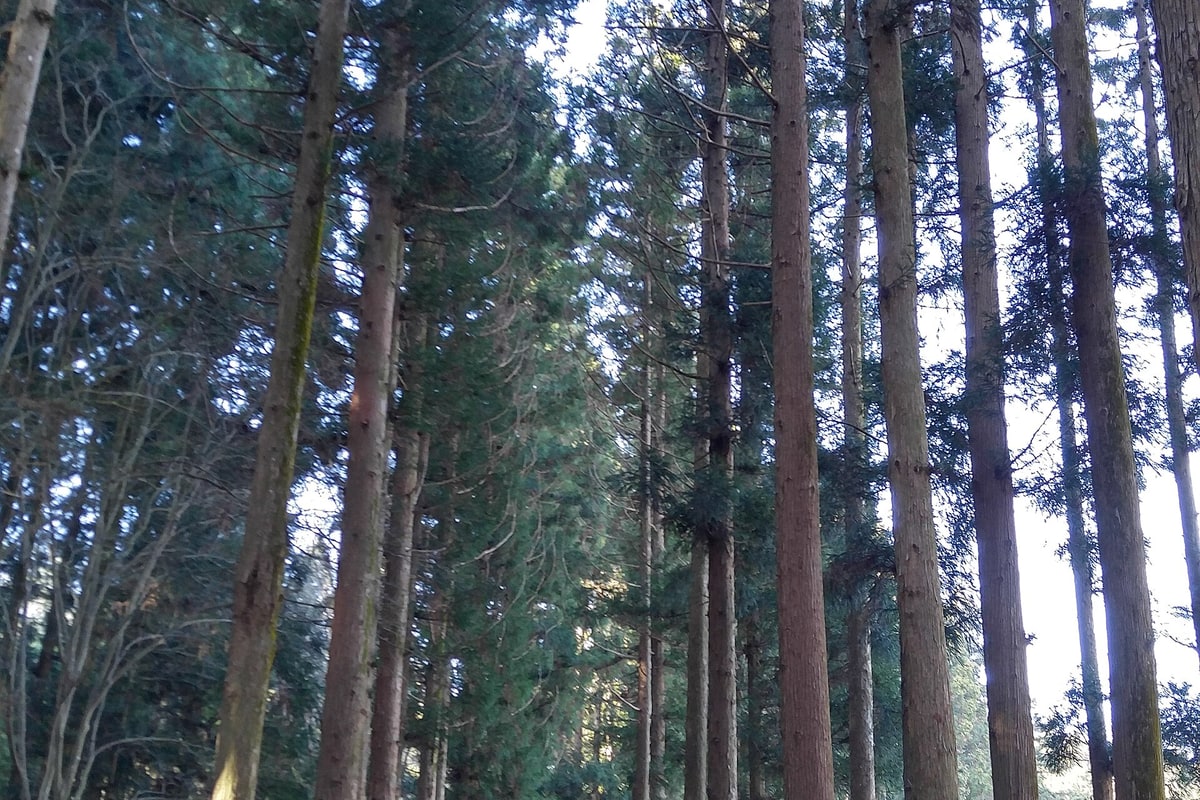
Towering 1957 Japanese cryptomeria cedar windbreak avenue lining the main entrance walk into Daehan Dawon. · Photo: Wikimedia Commons (CC BY-SA 3.0)
Pass the ticket gate onto Samnamu-gil, a straight woodland boulevard flanked by towering Japanese cryptomeria cedars (not metasequoia) planted as cold-wind barriers back in 1957. Early angled sunlight pierces the high evergreen canopy onto soft earth paths leading gently toward the tea amphitheater.
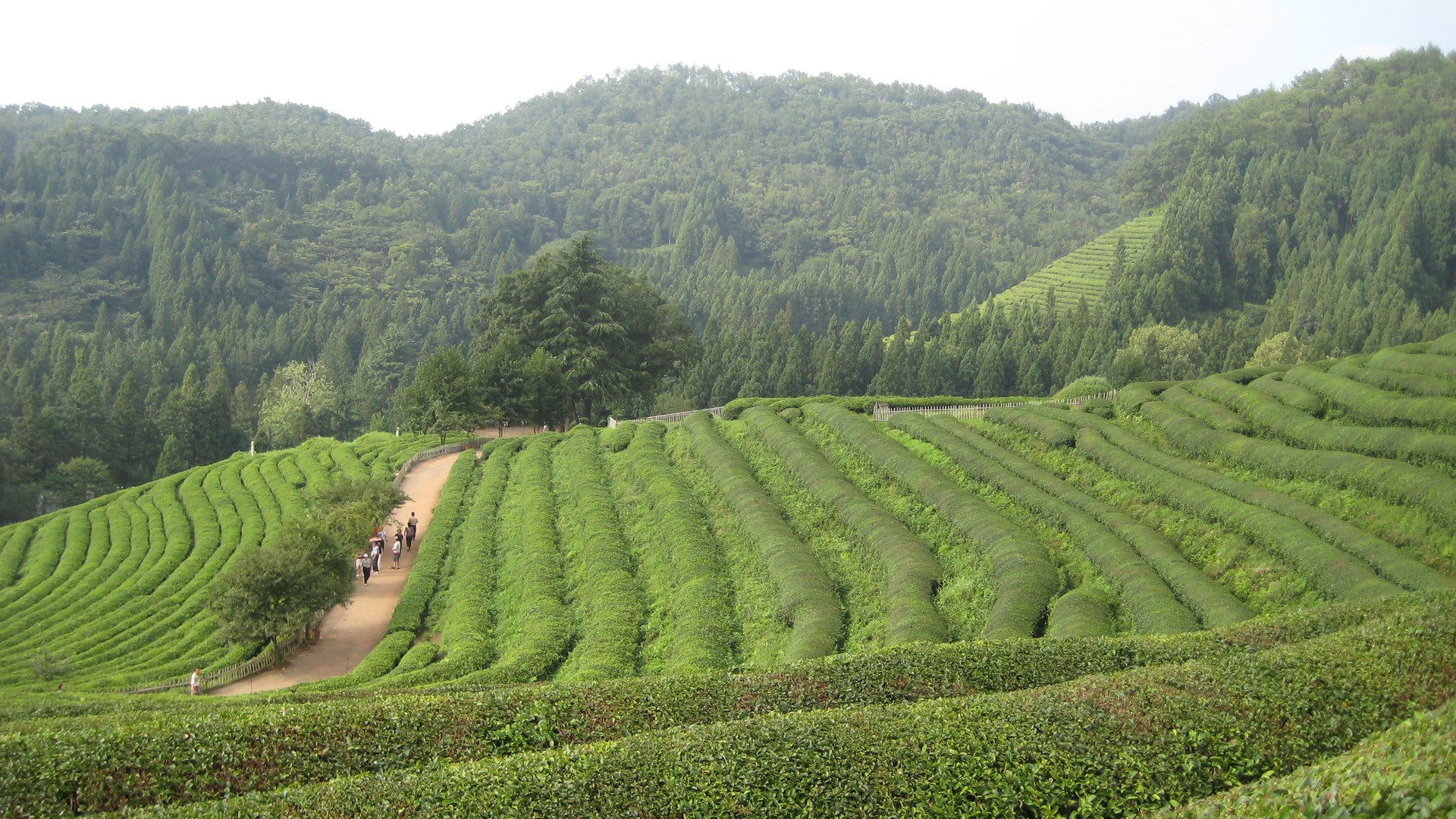
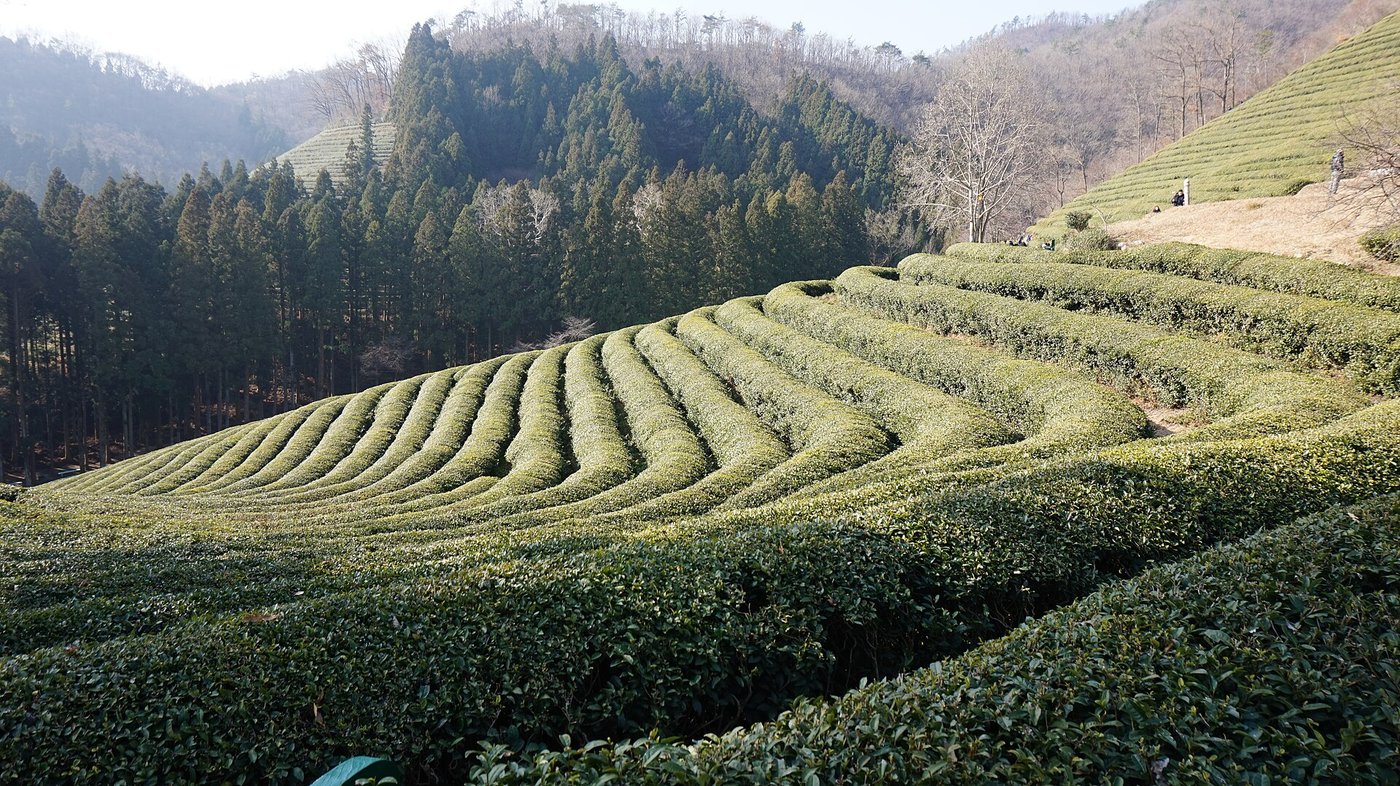
Curving contour tiers of trimmed green tea shrubs spanning the central amphitheater slopes at Daehan Dawon. · Photo: Wikimedia Commons (CC BY-SA 3.0)
Emerge from forest cover onto Daehan Dawon's open hillside bowl, where millions of trimmed green tea shrubs follow curved mountain contours uphill at 150–350 meters elevation. Climb past the Central Observatory onto the upper Sea Observatory ridge, looking past steep green rows straight toward Deukryang Bay along Korea's southern coast.
Artisanal Boseong green tea ice cream served beside freshly brewed local nokcha at the teahouse terrace. · Photo: Wikimedia Commons (CC BY-SA 3.0)
Loop back down the eastern side path shaded beneath tall bamboo groves onto the main wooden pavilion terrace. Finish your walk with Boseong's beloved specialty: concentrated dark-green nokcha (green tea) soft-serve ice cream with clean, bittersweet roasted leaf depth, paired with hot first-flush green tea or green-tea cold noodles.
Interactive Location & Route Map
Many rural Asian landmarks don’t appear when searching English spellings in Google Maps. Click any numbered stop on the map below or tap the button above to open the exact latitude/longitude pin on your phone.
Frequently Asked Questions
What is the best month to visit Boseong Daehan Dawon?
Late April through early June delivers the brightest fresh spring shoots and hosts the annual Boseong Tea Festival in early May, while September through mid-October offers mild, clear walking weather. Note that tea bushes turn dark brown during winter dormancy and mechanical trimming from late November to March.
Can visitors combine Daehan Dawon and Suncheon Bay in a single day?
Yes. Intercity buses and Mugunghwa trains link Boseong and neighboring Suncheon in roughly 45–60 minutes. Spend the morning walking Daehan Dawon right at 09:00 AM opening, eat lunch at Boseong or transfer early afternoon to Suncheon Bay National Garden and Reed Wetland for sunset.
Field Verification & Non-Sponsored Standards
This travel dispatch was researched exclusively through public transport (trains, local branch buses, ferries) and foot exploration. Uncharted Asia accepts zero commercial sponsorships, free stays, or sponsored meals. Timetables, fare gates, and mountain trail conditions are independently verified against physical operator timetables. Learn more in our Editorial Methodology.