Damyang Juknokwon & Gwanbangjerim: Walking Korea’s Towering Bamboo & Levee Forests
Just an hour by Bus 311 from Gwangju, explore 310,000 square meters of quiet bamboo pathways, 300-year-old riverbank zelkovas built in 1648, and leafy Metasequoia lanes.
Field Warnings & Critical Traps to Avoid
Summer bamboo mosquitoes, slick fallen bamboo leaves, and local bicycle deadlines.
Dense Forest Mosquitoes Inside Humid Bamboo Groves (June–September)
Tall bamboo culms block direct wind across sunken paths from June through September, creating warm pockets where forest mosquitoes thrive. Apply effective insect repellent before crossing the Juknokwon ticket gate.
Slippery Fallen Bamboo Leaves Across Northern Hillside Stairs
Dry fallen bamboo leaves form slick layers across shaded slope steps after morning dew or rainfall. Wear treaded sneakers and use wooden handrails descending back toward the cultural village exit.
Foreign Visitors Cannot Unlock Automated Municipal Bikeshare Apps
Automated municipal bike docks require Korean resident verification numbers. Instead, rent standard or tandem bicycles with cash or card at manual rental shops lining Gwanbangjerim entrance before ~17:30–18:00 closing times.
Less than an hour outside Gwangju in Jeollanam-do, Damyang County brings together three remarkably distinct wooded corridors linked cleanly along the Damyangcheon stream (a clear upper tributary feeding the Yeongsan River basin): the cool hillside bamboo canopy of Juknokwon, the 370-year-old flood-control riverbank forest of Gwanbangjerim, and the towering Metasequoia Road promenade.
Car-free exploration could scarcely be simpler: ride KTX from Seoul Yongsan to Gwangju-Songjeong (~1 hr 45 mins), transfer via metro or taxi to Gwangju Station or U-Square Bus Terminal, and board Bus 311 directly to the Juknokwon stop (~45–55 mins, departures roughly every 15–20 mins; ~2,300–3,400 KRW via T-money). All three destinations connect neatly on foot or by manual rental bicycle along the riverbank—just be aware automated municipal bike docks require Korean resident verification.
Step through Juknokwon (3,000 KRW adult) right at 09:00 AM opening to stroll its eight quiet bamboo paths and upper Sigamunhwachon Hanok pavilions before group buses arrive, applying mosquito repellent in warm summer months. Cross the bridge afterward for signature Damyang Daetongbap—chestnut, jujube, and glutinous rice steamed inside a single-use fresh bamboo cylinder—and grilled Tteokgalbi beef patties, stroll free of charge beneath the ~185 protected 1648 trees of Gwanbangjerim, and conclude along the soft red-clay footpaths of Metasequoia Road (2,000 KRW adult core promenade).
Step-by-Step Visual Route & Timestamps
Follow our exact on-the-ground walking pace and timestamps. Click any photo or stop title to open rich multi-photo galleries, field tips, and expanded logistical guides.
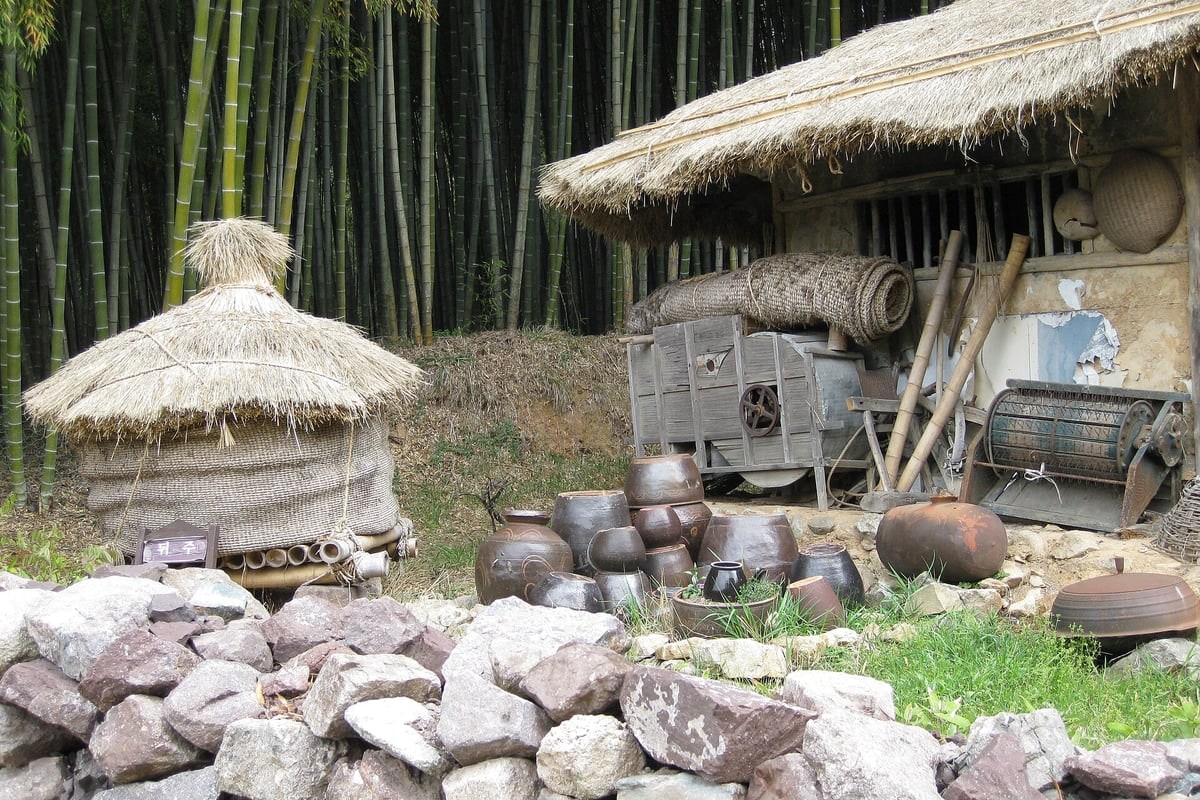
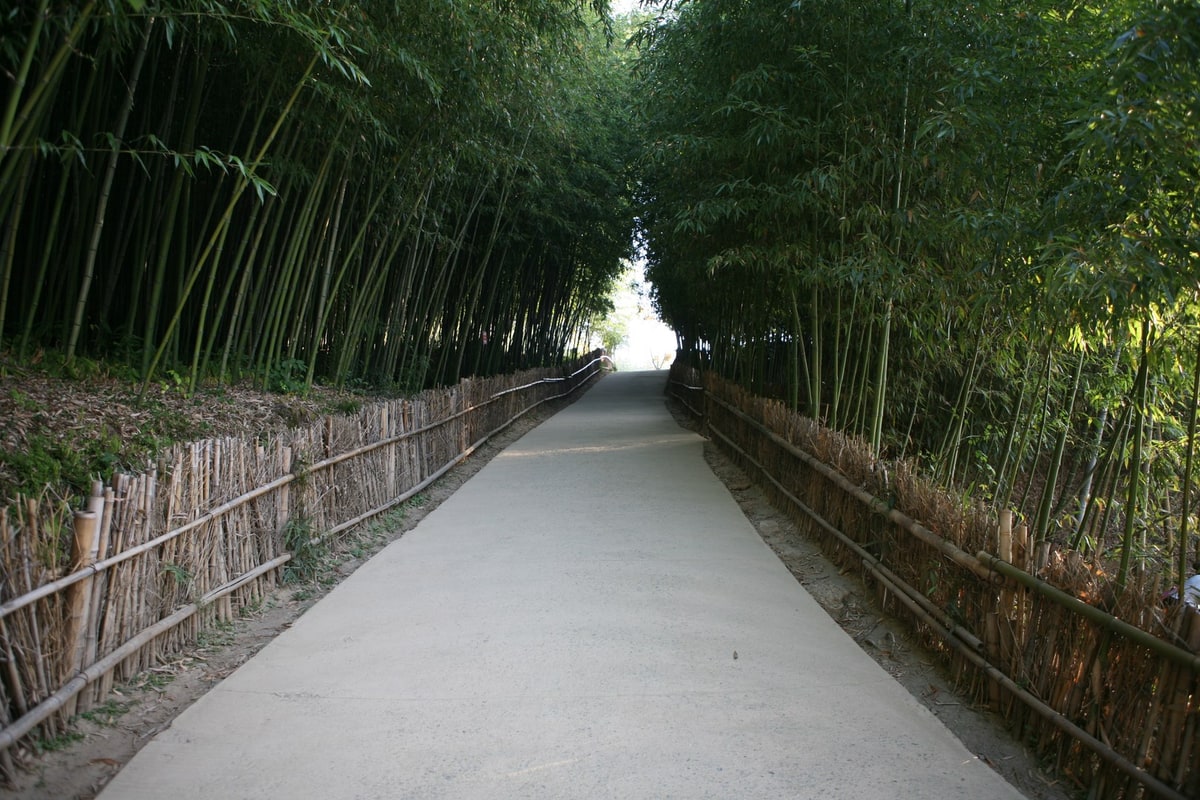
Morning sunlight filtering onto the stone footpath flanked by soaring green bamboo inside Juknokwon. · Photo: Wikimedia Commons (CC BY-SA 4.0)
Enter Juknokwon right at 09:00 AM opening (3,000 KRW adult) to walk 2.4 kilometers of interconnected paths spanning roughly 310,000 square meters of steep, cool hillside. Eight named walking routes—including the Trail of Philosophers, Good Luck Road, and Memory Path—wind beneath dense green canes filtering morning sunlight onto stepped stone walkways.
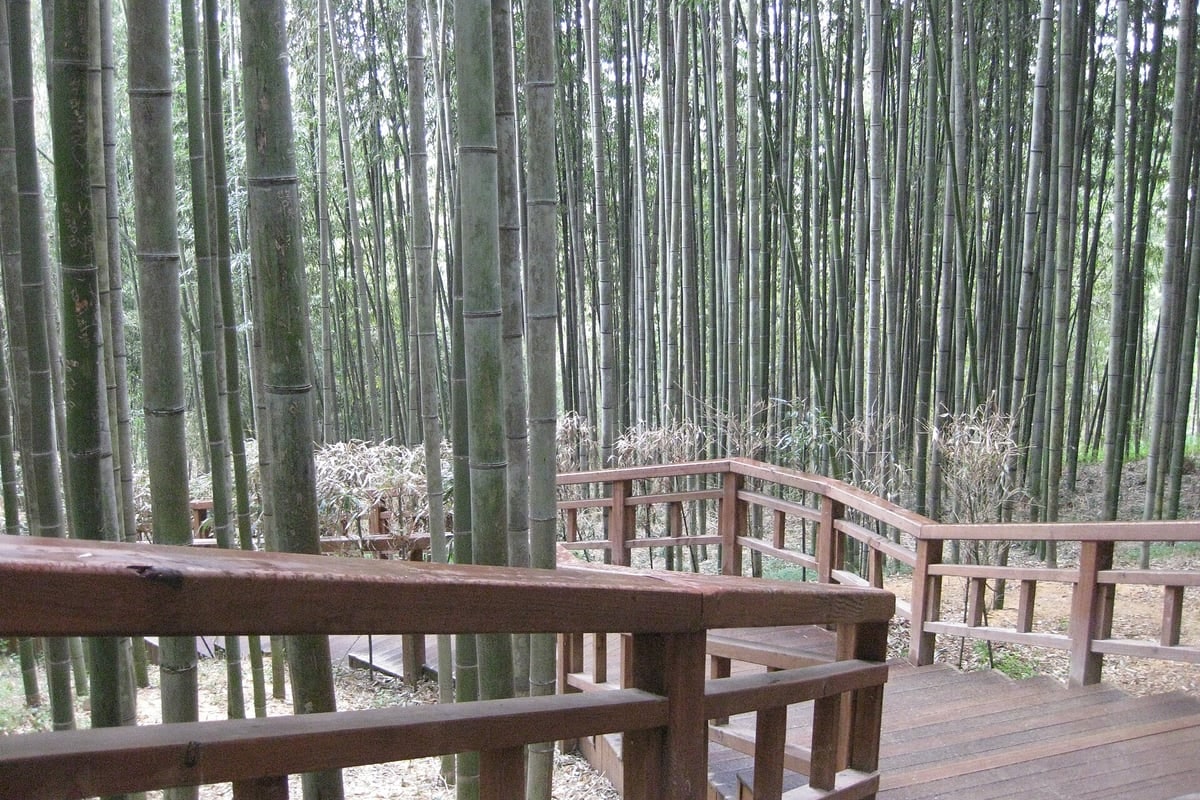
Restored wooden Hanok pavilion sheltered inside Juknokwon's upper cultural garden zone. · Photo: Wikimedia Commons (CC BY-SA 4.0)
Exit the upper trail gate straight into Sigamunhwachon (Poetry Cultural Village), a restored riverside zone inside Juknokwon featuring traditional tiled Hanok pavilions, lotus ponds, and quiet stone courtyards framed by tall bamboo groves. Stop at the park's teahouse to sample local Jukro-cha ("bamboo-dew tea") and pale green bamboo-leaf ice cream.
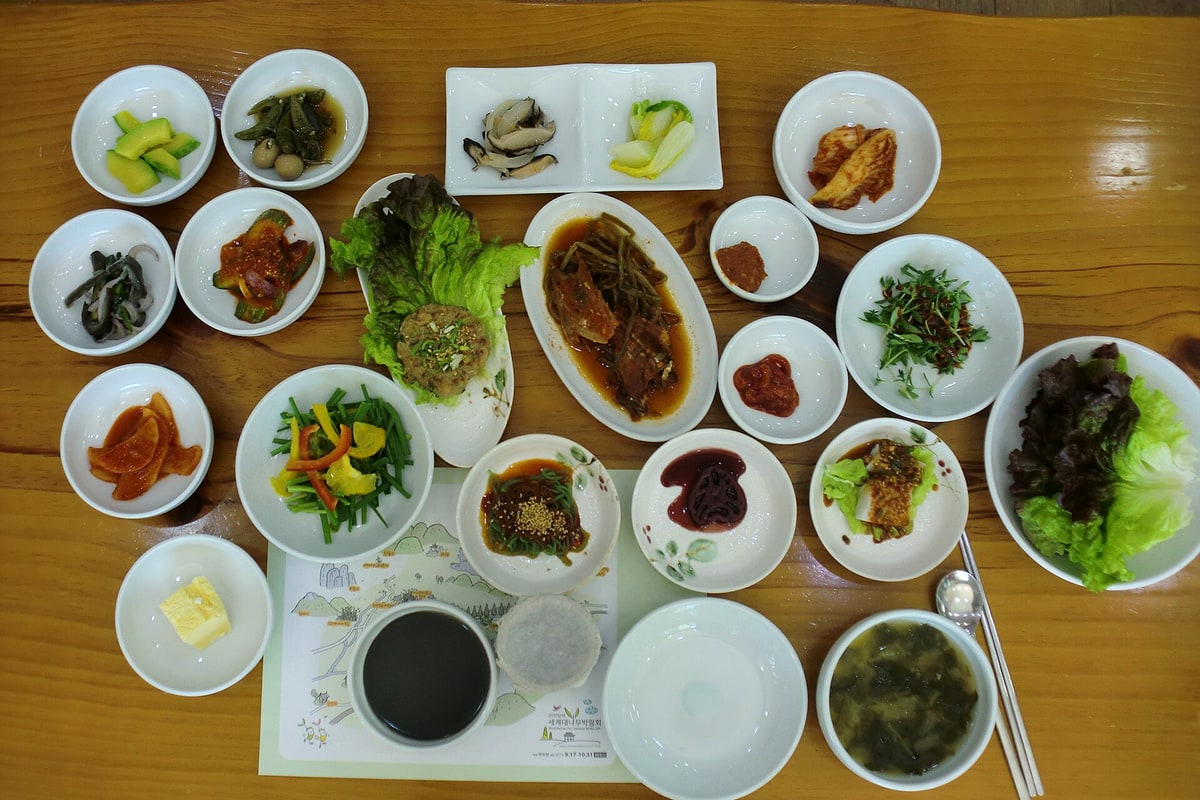
Freshly steamed Damyang Daetongbap rice topped with chestnuts, jujubes, and seeds inside a green bamboo cylinder. · Photo: Wikimedia Commons (CC BY-SA 4.0)
Step outside Juknokwon's main gate across the street to the historic restaurant row specializing in Damyang's signature Daetongbap (glutinous and multi-grain rice packed with chestnuts, jujubes, black beans, and gingko nuts, then steamed inside a fresh single-use bamboo tube) paired with sizzling minced charcoal beef patties (Tteokgalbi).
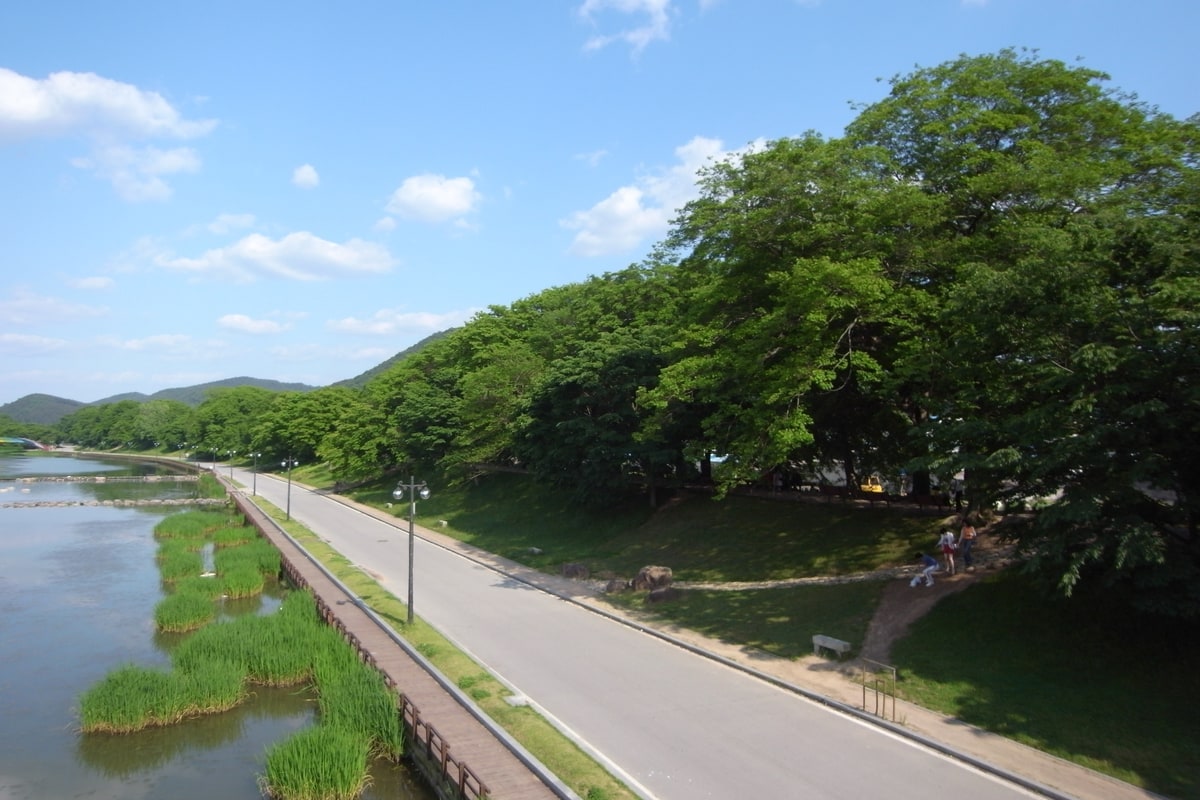
Centuries-old zelkova and hackberry trees shading the elevated walking levee of Gwanbangjerim. · Photo: Wikimedia Commons (CC BY-SA 4.0)
Cross the shallow stepping stones over the Damyangcheon tributary (which flows onward into the Yeongsan River basin) to reach Gwanbangjerim, a free, 2-kilometer earthen levee lined with roughly 185 centuries-old zelkovas, hackberries, and nettle trees designated South Korean Natural Monument No. 366.
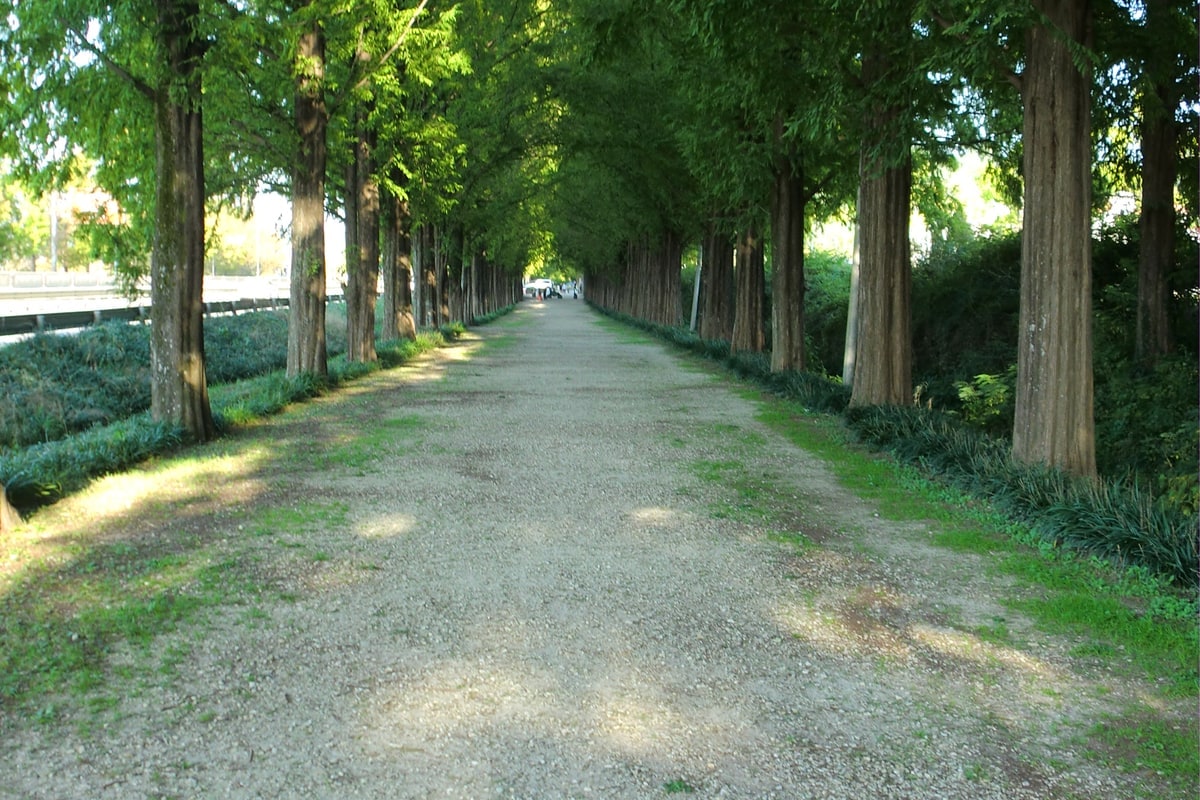
Symmetrical double rows of tall Metasequoia dawn redwoods arching over the vehicle-free promenade. · Photo: Wikimedia Commons (CC BY-SA 4.0)
Reach the eastern end of Gwanbangjerim to enter Damyang's iconic Metasequoia-lined pedestrian promenade (2,000 KRW adult park admission for the fenced core boulevard). Planted in the early 1970s, towering rows of dawn redwoods create a symmetrical natural archway arching high over vehicle-free clay footpaths.
Interactive Location & Route Map
Many rural Asian landmarks don’t appear when searching English spellings in Google Maps. Click any numbered stop on the map below or tap the button above to open the exact latitude/longitude pin on your phone.
Frequently Asked Questions
What are the admission fees in Damyang, and how do I get there from Gwangju?
From Gwangju U-Square Bus Terminal or Gwangju Station, ride Bus 311 directly to Juknokwon (~45–55 mins, ~2,300–3,400 KRW via T-money). Juknokwon admission costs 3,000 KRW (adult) and Metasequoia Road costs 2,000 KRW (adult), while the entire 2 km Gwanbangjerim river levee park and Damyang Noodle Street are completely free.
Can I visit Damyang as an independent day trip from Seoul without a car?
Yes. Take a morning KTX high-speed train from Seoul's Yongsan Station to Gwangju-Songjeong Station (~1 hr 45 mins), ride Gwangju Metro or a quick taxi to U-Square/Gwangju Station, and connect straight onto frequent Bus 311 (departing every 15–20 minutes). All three nature areas connect on foot in an easy 4-to-5-hour loop.
Field Verification & Non-Sponsored Standards
This travel dispatch was researched exclusively through public transport (trains, local branch buses, ferries) and foot exploration. Uncharted Asia accepts zero commercial sponsorships, free stays, or sponsored meals. Timetables, fare gates, and mountain trail conditions are independently verified against physical operator timetables. Learn more in our Editorial Methodology.