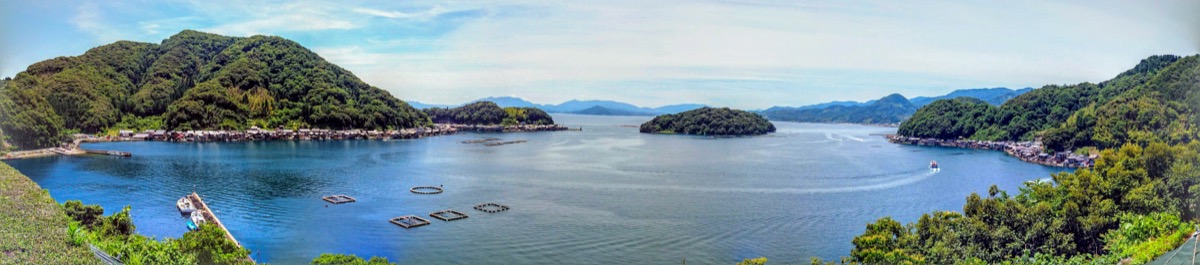
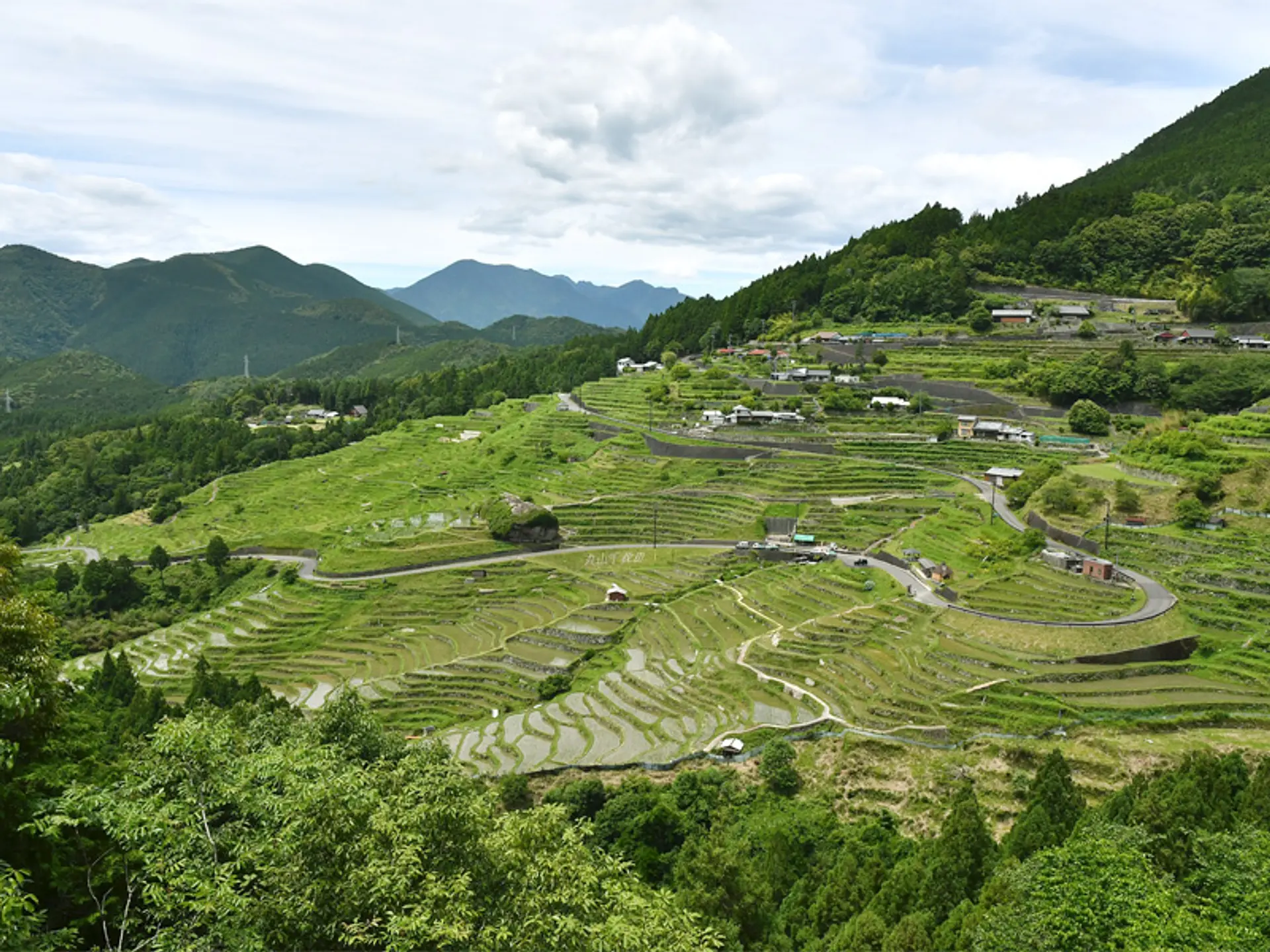
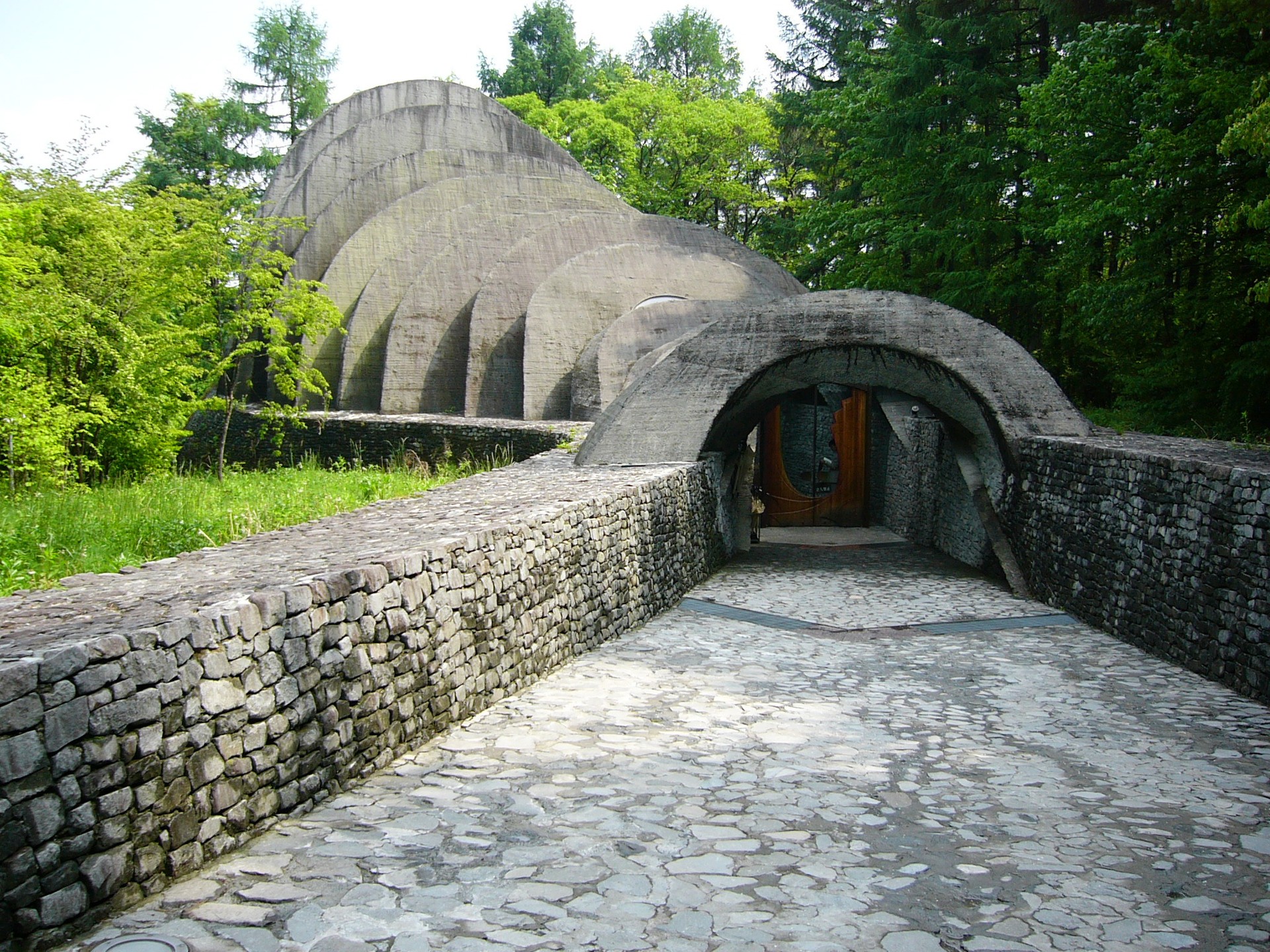
Cheow Lan Lake & Khao Sok Rainforest: Floating Raft Houses & Limestone Karst Towers
Cruise past sheer Triassic karst pillars rising out of Cheow Lan Reservoir to sleep inside signal-free floating raft camps, visit Coral Cave, and drift dawn gibbon safaris in southern Thailand.
Field Warnings & Critical Traps to Avoid
Zero cellular network on water, monsoon Nam Talu flash-flood closures, and spray-prone boat decks.
Zero Mobile Signal & Night-Only Electricity at Floating Camps
All mobile networks (AIS, True, dtac) disappear shortly after longtail boats enter the deep limestone bays. Most rustic National Park & private bamboo camps fire generators purely for evening hours (~18:00–22:00)—bring offline maps, headlamps, and high-capacity power banks.
Nam Talu Cave Closes Strictly During Monsoon Floods (June–November)
Do NOT confuse dry Coral Cave (Tham Pakarang) with wet river cave Tham Nam Talu. Nam Talu experiences lethal sudden flash flooding during rainy months and is officially closed by National Park rangers between roughly June and November—never let unlicensed guides take you inside during high rain alerts.
Open Longtail Spray & Night Pontoon Water Safety
Afternoon reservoir squalls and open-deck longtail bow spray soak unprotected luggage within seconds. Store passports and electronics inside sealed IPX6 dry bags, wear anti-leech socks if walking wet forest paths, and always clip life vests before kayaking or swimming over 40 m deep bays.
Set inside southern Thailand midway between Phuket and Surat Thani, Khao Sok National Park shields a humid lowland evergreen ecosystem estimated at over 160 million years old. Its dramatic centerpiece, Cheow Lan Lake (Chiao Lan Reservoir), formed when Ratchaprapha Dam was commissioned and flooded 185 square kilometers of jungle valley in 1987—leaving scores of vertical Permian-Triassic limestone karst towers stranded straight inside clear turquoise waterways.
Make sure transit takes you to the right entrance: head to Ratchaprapha Dam Municipal Pier (~75 minutes west of Surat Thani Airport URT via ~250 THB minivan), NOT Khao Sok’s main roadside headquarters town 60 kilometers further west. Foreign visitors pay cash fees at the pier (200 THB Khao Sok sanctuary conservation fee + 40 THB municipal pier fee) before boarding ribbon-draped wooden longtail boats past flooded forest snags and the iconic Khao Sam Kloe (“Three Companions”) limestone pillars.
Overnight bamboo floating raft camps sit cleanly beyond cellular coverage with zero Wi-Fi and generator electricity typically limited to ~18:00–22:00. Pack waterproof dry bags and high-capacity power banks, swim and kayak with compulsory life jackets over 27°C waters, visit dry Coral Cave (Tham Pakarang) via peaceful 500-rai bamboo raft (while observing strict June–November monsoon flood closures on separate wet cave Tham Nam Talu), and wake before 06:00 AM to drift past steaming canopy branches listening for white-handed gibbons and hornbills.
Step-by-Step Visual Route & Timestamps
Follow our exact on-the-ground walking pace and timestamps. Click any photo or stop title to open rich multi-photo galleries, field tips, and expanded logistical guides.
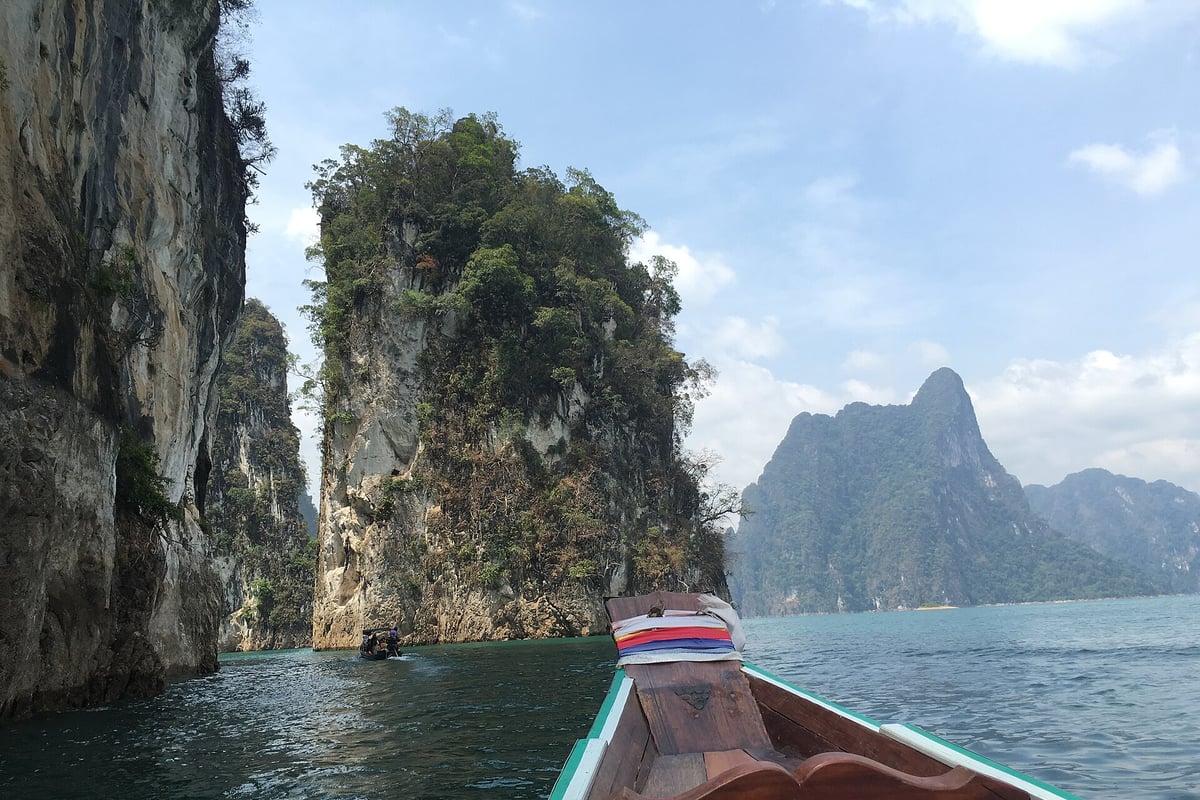
Longtail boat cruising out from Ratchaprapha Dam into Cheow Lan's limestone island maze. · Photo: Wikimedia Commons (CC BY-SA 4.0)
Pay the municipal pier fee (40 THB) and national sanctuary conservation entry (200 THB) at Ratchaprapha Dam before stepping onto a long wooden longtail boat ("rua hang yao") trimmed with colorful bow ribbons. Cruising westward reveals dead forest tree snags and vertical Cretaceous limestone ridges flanking the 185-square-kilometer reservoir completed in 1987.
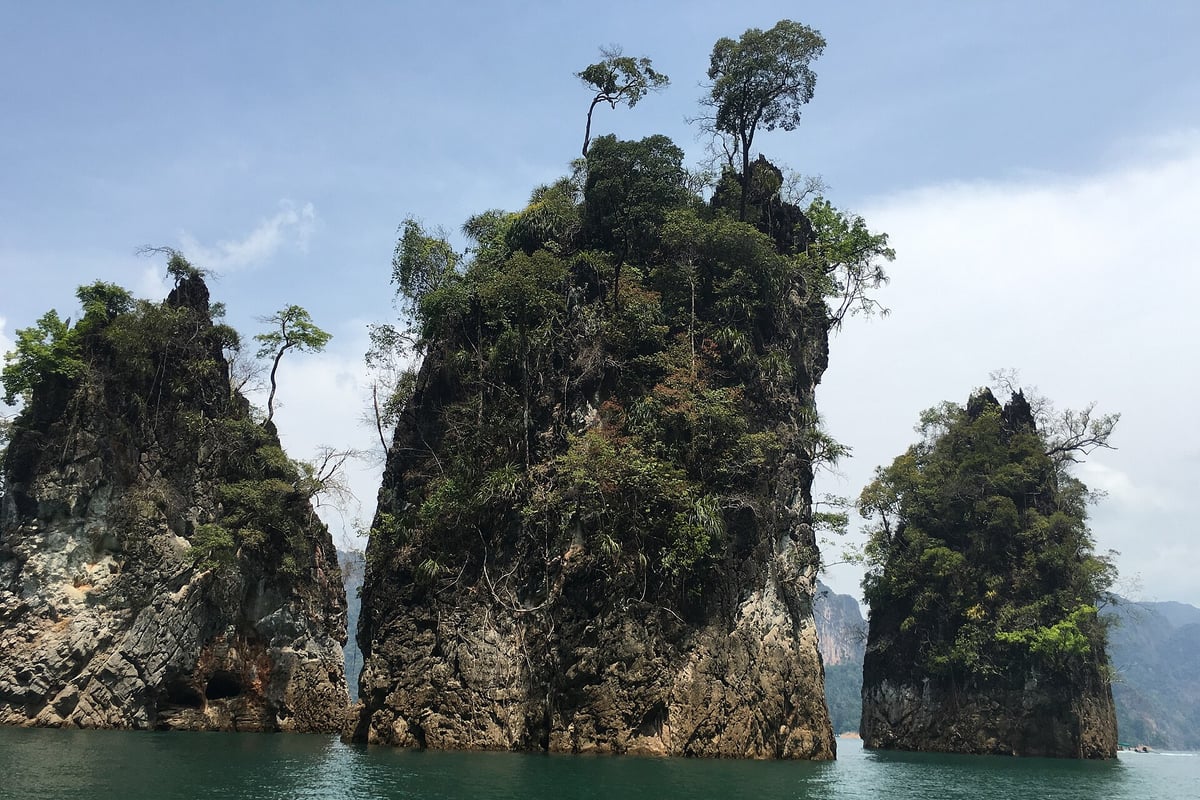
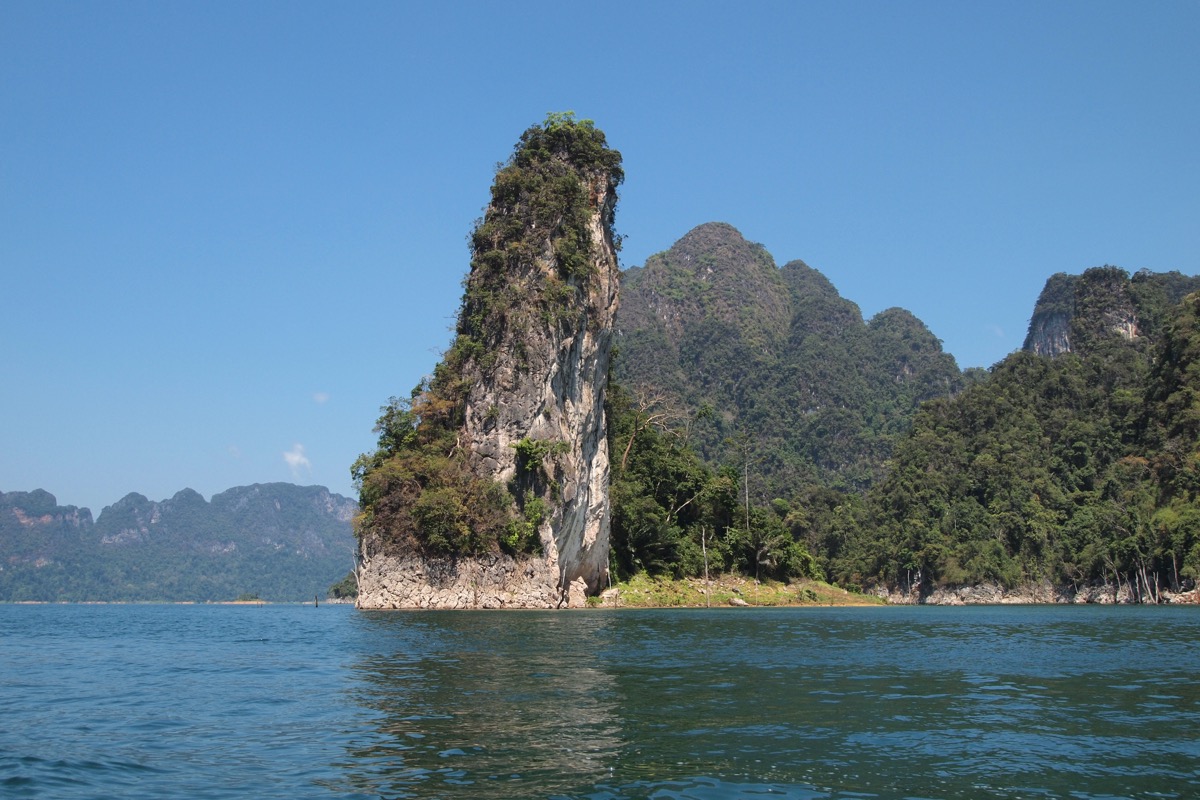
Iconic limestone trio of Khao Sam Kloe framed against quiet turquoise water in central Cheow Lan. · Photo: Wikimedia Commons (CC BY-SA 4.0)
Midway toward deeper camps, skippers throttle engines down beside Khao Sam Kloe ("Three Brothers" / "Three Companions")—three closely grouped limestone pillars soaring straight from glassy blue-green waters, flanked by orchid-spotted cliff crevices and often photographed on the National Park's iconic visual corridor.
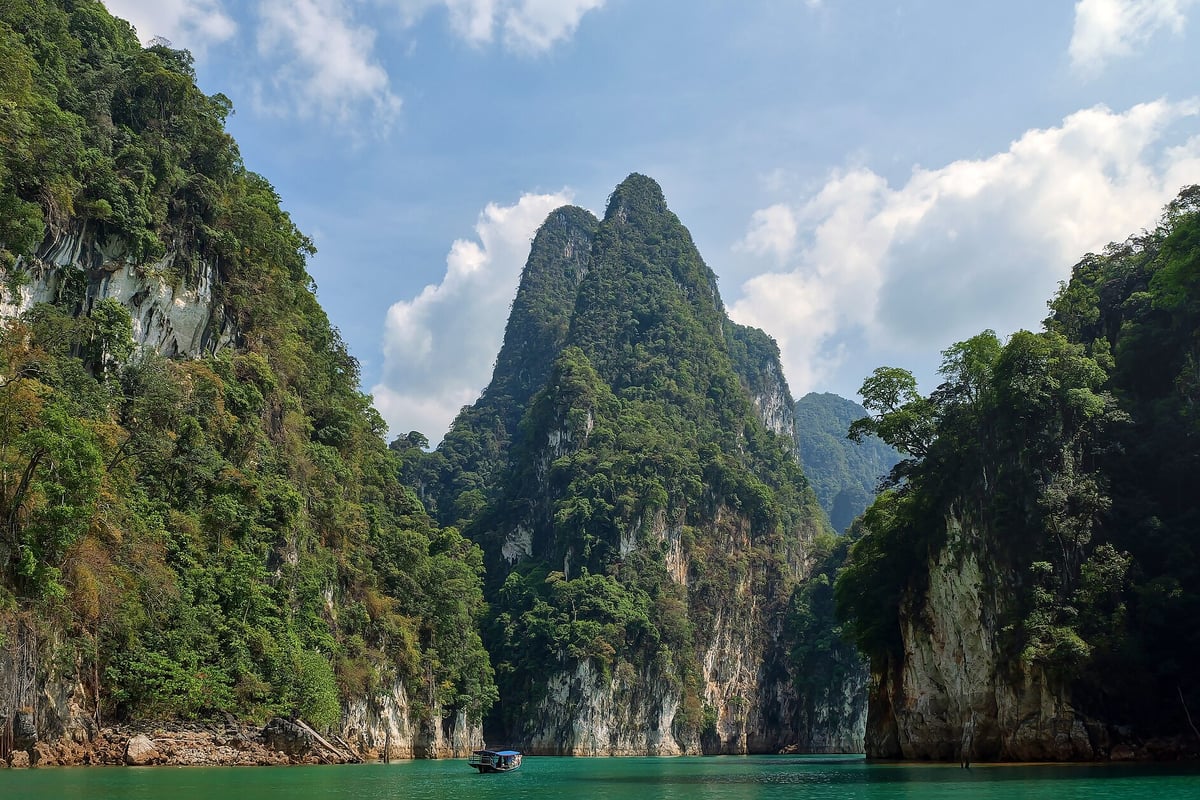
Traditional timber and bamboo floating bungalows moored cleanly inside a calm karst lagoon. · Photo: Wikimedia Commons (CC BY-SA 4.0)
Step off the wooden longtail bow directly onto bamboo-and-timber raft bungalows tethered smoothly along calm outer inlets. Without internet or traffic, spend afternoons kayaking free around flooded rainforest coves, jumping into warm 27–28°C freshwater lagoons (life vests compulsory), and eating freshly grilled whole reservoir fish caught locally before sunset.
Staghorn-like calcite stalagmites inside dry Coral Cave (Tham Pakarang) reached via bamboo raft. · Photo: Wikimedia Commons (CC BY-SA 4.0)
Walk ~25 minutes through wild lowland rainforest behind the inner lagoon to a sheltered green interior pond ("500 Rai Lagoon"), then glide silently aboard a long motorized bamboo raft to the entrance of dry Coral Cave ("Tham Pakarang")—noted for delicate branching stalagmites resembling petrified marine staghorn coral formations.
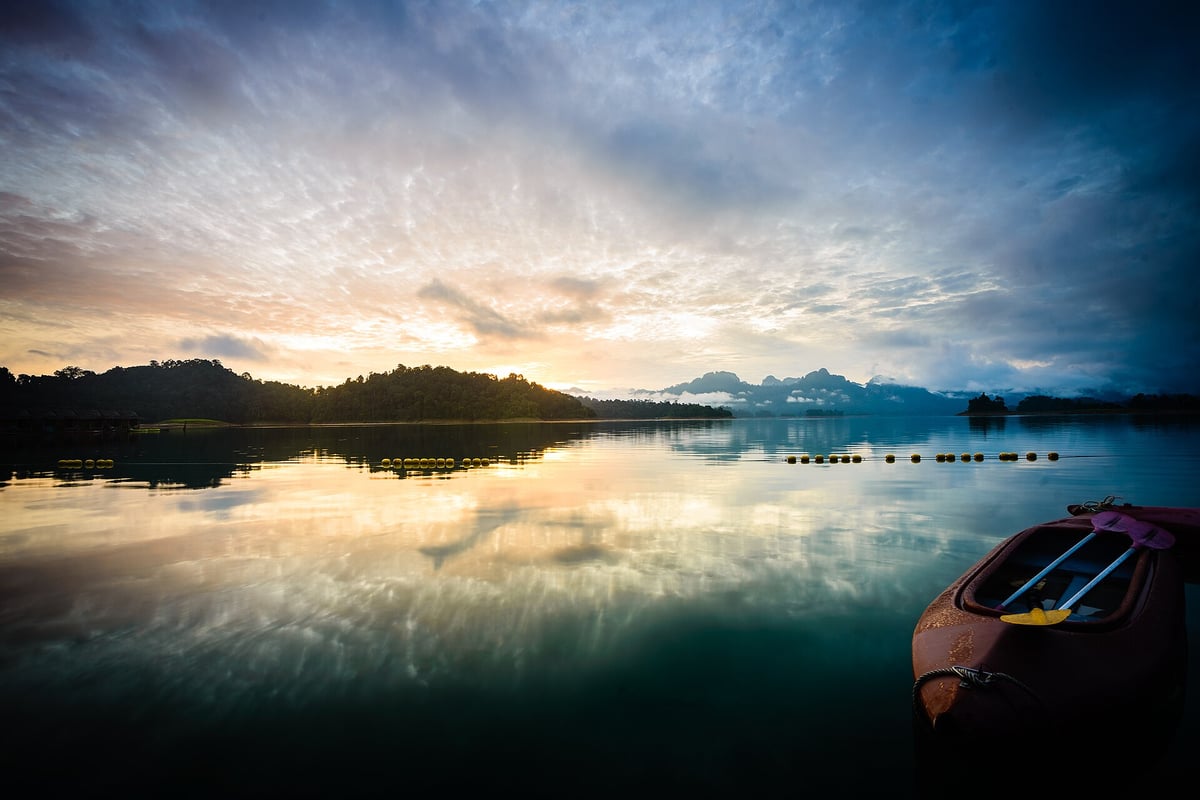
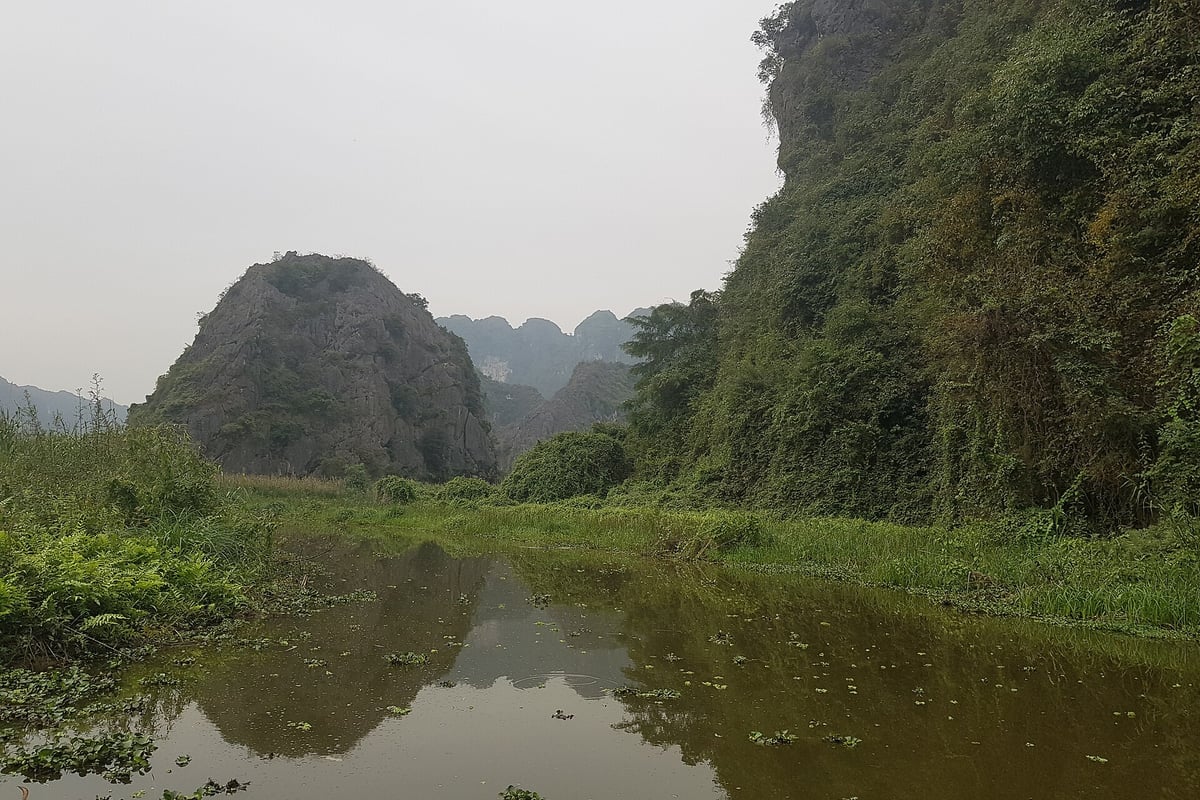
Dawn fog resting calmly above still waters of Cheow Lan Lake beneath forested limestone ridges. · Photo: Wikimedia Commons (CC BY-SA 4.0)
Before breakfast at 06:00–06:30 AM, board your boat quietly as low wisps of river fog hover across the cooling water. Captains idle softly beneath towering canopy fig trees so travelers can listen for the echoing calls of endangered white-handed gibbons, scan treetops for noisy Great Hornbills, and spot dusty leaf monkeys before sun warmth sends wildlife deep inland.
Interactive Location & Route Map
Many rural Asian landmarks don’t appear when searching English spellings in Google Maps. Click any numbered stop on the map below or tap the button above to open the exact latitude/longitude pin on your phone.
Frequently Asked Questions
What fees are collected in cash at Ratchaprapha Dam Pier, and how is Khao Sok Pier different from Khao Sok Village?
No—they sit roughly 60 km (~1 hr drive) apart! "Ratchaprapha Dam Pier" ("Cheow Lan Pier") on the eastern side is the sole departure point for Cheow Lan Lake boats, whereas "Khao Sok Village" lies beside Highway 401 to the west for jungle-lodge hikes. At the dam pier, foreign adults pay cash fees of 200 THB (Khao Sok NP / sanctuary conservation fee) plus 40 THB (municipal pier fee).
When are Khao Sok caves safe to enter, and do floating bungalows have Wi-Fi?
Most floating camps sit inside deep valleys with ZERO mobile coverage and no reliable Wi-Fi; basic camps also run generators only between roughly 18:00 and 22:00. Meanwhile, dry Coral Cave (Tham Pakarang) typically stays accessible most months, whereas wet river cave Nam Talu CLOSES strictly from June to November due to deadly monsoon flash-flood hazards.
Field Verification & Non-Sponsored Standards
This travel dispatch was researched exclusively through public transport (trains, local branch buses, ferries) and foot exploration. Uncharted Asia accepts zero commercial sponsorships, free stays, or sponsored meals. Timetables, fare gates, and mountain trail conditions are independently verified against physical operator timetables. Learn more in our Editorial Methodology.