Doi Mae Salong Ridge: Northern Thailand’s Yunnanese Settlement & Mountain Oolong Tea Estates
Above Chiang Rai’s lowlands along the Myanmar border, descend through mountain mist across terraced Jin Xuan and Qing Xin Oolong slopes rooted in Taiwan tea craftsmanship and 1960s border history.
Field Warnings & Critical Traps to Avoid
Steep 20% scooter gradients, frigid 8°C winter nights, and early 16:00–16:30 final descent rides.
Steep 20% Mountain Switchbacks Overheat Small 110cc Scooters
Routes 1130 and 1234 up into Doi Mae Salong climb narrow hairpin gradients exceeding 15–20%. Underpowered 110cc automatic city scooters risk brake fade coming downhill—ride at least a 150cc bike safely or rely on shared green songthaews and local drivers.
Cold Winter Nights Below 8°C Without Central Room Heating
Sitting between 1,200 and 1,350 meters elevation, Santikhiri plunges under 8–10°C overnight during cool-season winter. Traditional ridge bungalows rarely include wall heaters; pack fleece layers and thermal socks.
Last Downhill Public Songthaews Depart Before 16:30 & Songkran Closures
Public green songthaews descending toward Mae Chan/Pasang stop around 16:00–16:30 with zero metered taxis available up top. Also note that tea roasting factories close for Thai New Year (mid-April Songkran week).
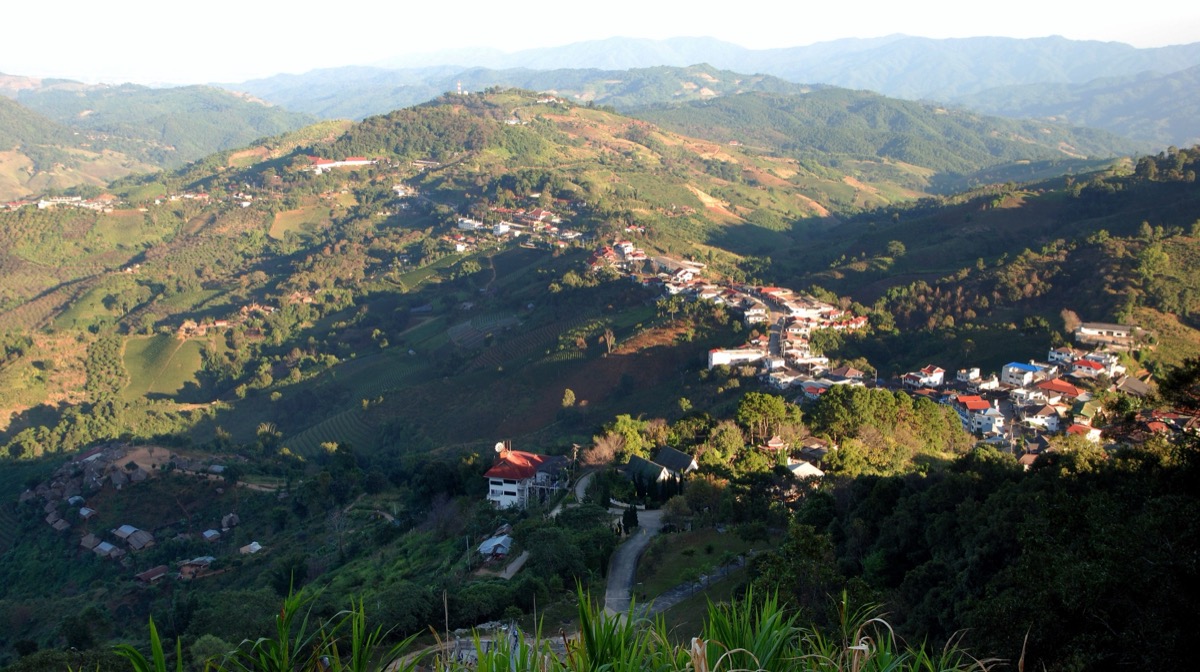
An hour and a half north of Chiang Rai up winding mountain hairpins between 1,200 and 1,350 meters elevation, Doi Mae Salong (officially Santikhiri, “Hill of Peace”) feels culturally closer to rural Yunnan or alpine Taiwan than lowland Thailand. First settled in 1961 by Chinese Nationalist 93rd Division veterans and their families after trekking out of Yunnan across Myanmar, the hillside town later partnered with Thailand’s Royal Project and visiting Taiwanese tea specialists in the 1980s to transform former poppy hillsides into thriving Jin Xuan (#12) and Qing Xin (#17) Oolong tea estates.
Reaching the crest car-free starts at Chiang Rai Bus Terminal 1: catch a green Mae Sai–bound bus north to Pasang Junction (Pak Thang Mae Salong), then hop onto a shared green songthaew climbing the steep ridge road (~60 THB, ~1 hr climb; final return pickups leave town by 16:00–16:30). Because Highways 1130 and 1234 climb sharp 15–20% gradients, travelers on rental motorbikes should avoid weak 110cc city scooters prone to downhill brake fade.
Stay overnight to experience Santikhiri’s unhurried rhythm: greet morning valley clouds from Wat Santikhiri (Phra Borommathat Chedi) honoring the Princess Mother, walk the dawn village market, inspect tea harvesting across 101 Tea Plantation by mid-morning, compare Gongfu roasts freely along Chinese-speaking teahouses (confirm unit pricing by gram or jin cleanly before buying), enjoy steaming handmade Yunnan Po Su Bao buns and rice noodles before afternoon sell-outs, and pay 20 THB to trace archival marches inside the Chinese Martyrs’ Memorial Museum.
Step-by-Step Visual Route & Timestamps
Follow our exact on-the-ground walking pace and timestamps. Click any photo or stop title to open rich multi-photo galleries, field tips, and expanded logistical guides.
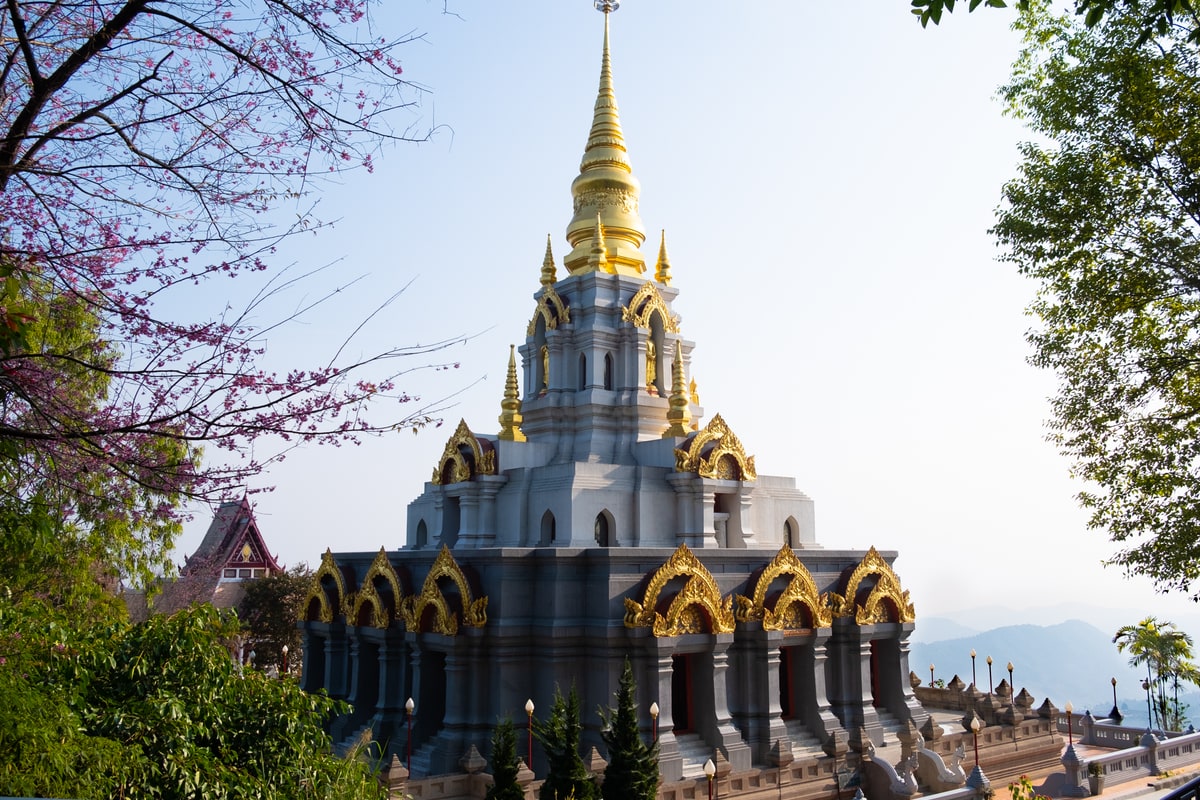
Phra Borommathat Chedi overlooking sunlit morning valley clouds above Santikhiri ridge. · Photo: Wikimedia Commons (CC BY-SA 4.0)
Climb the steep 718 dragon-lined steps (or ride the rear paved road) to Phra Borommathat Chedi Srinakharinthara Sathit Maha Santi Khiri perched above the village ridge. Built in 1996 in honor of Thailand's late Princess Mother Srinagarindra, the golden hilltop stupa surveys thick morning clouds flooding surrounding border valleys.
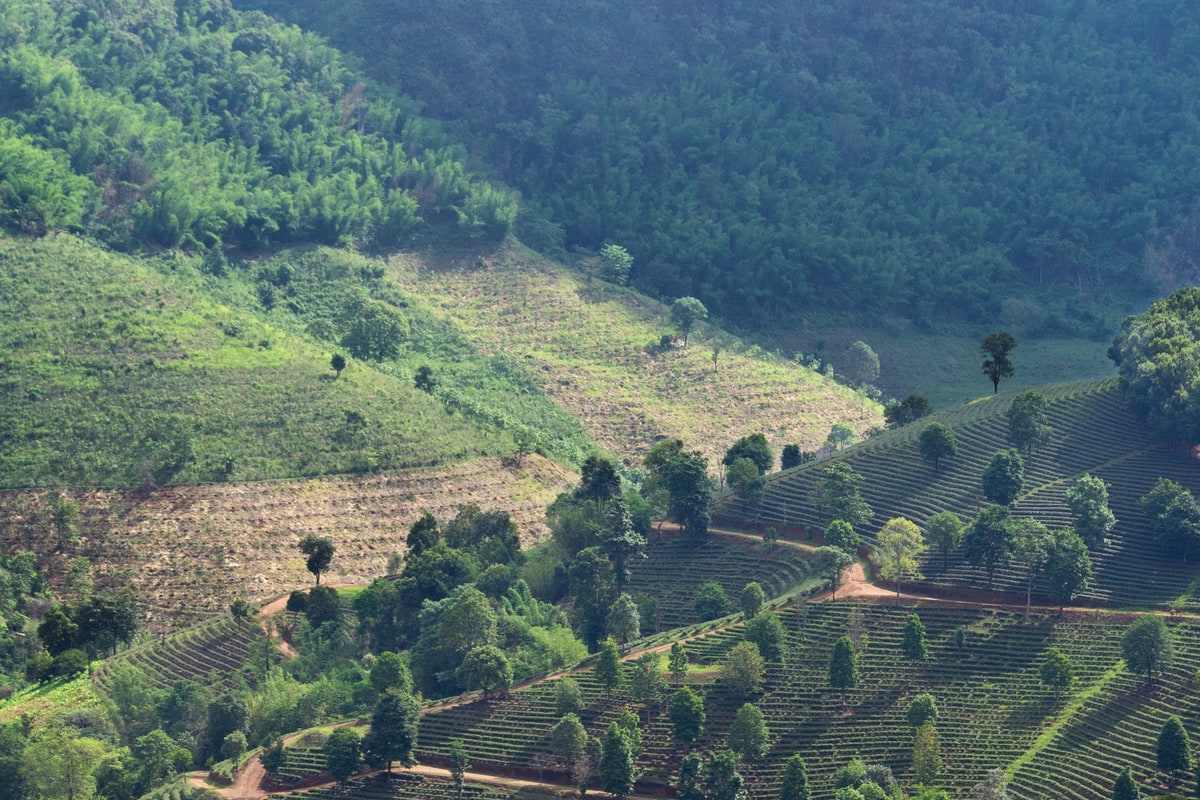
Contoured rows of highland oolong shrubs draping steep hillsides across 101 Tea Plantation in Mae Salong. · Photo: Wikimedia Commons (CC BY-SA 4.0)
Walk along sunny terraced lanes at established hillside estates like 101 Tea Plantation (Rai Cha 101) or Wang Put Tan just outside the village core. Rows of Jin Xuan and Qing Xin Oolong tea shrubs hug contoured curves where local Akha pickers hand-pluck tender shoots for sunlit bamboo-tray withering.
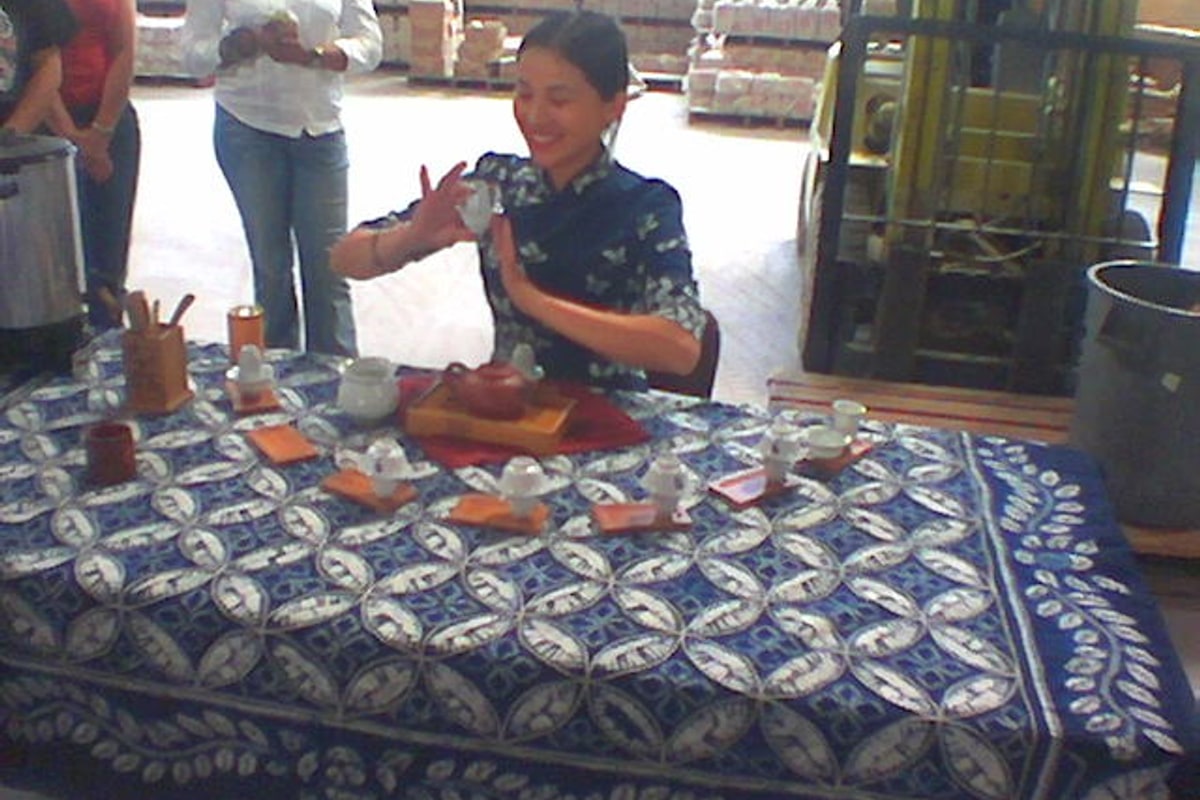
Traditional clay teapot and Gongfu tea cups arranged for alpine oolong tasting along Mae Salong's main road. · Photo: Wikimedia Commons (CC BY-SA 4.0)
Step off the ridge into one of Santikhiri's family-run Chinese teahouses along the main street. Tea proprietors regularly invite guests to sit at wooden tea tables for complimentary Gongfu pours using purple-clay pots and tall aroma cups—comparing creamy-floral Jin Xuan No. 12 against deeper, roasted Qing Xin Oolong No. 17.
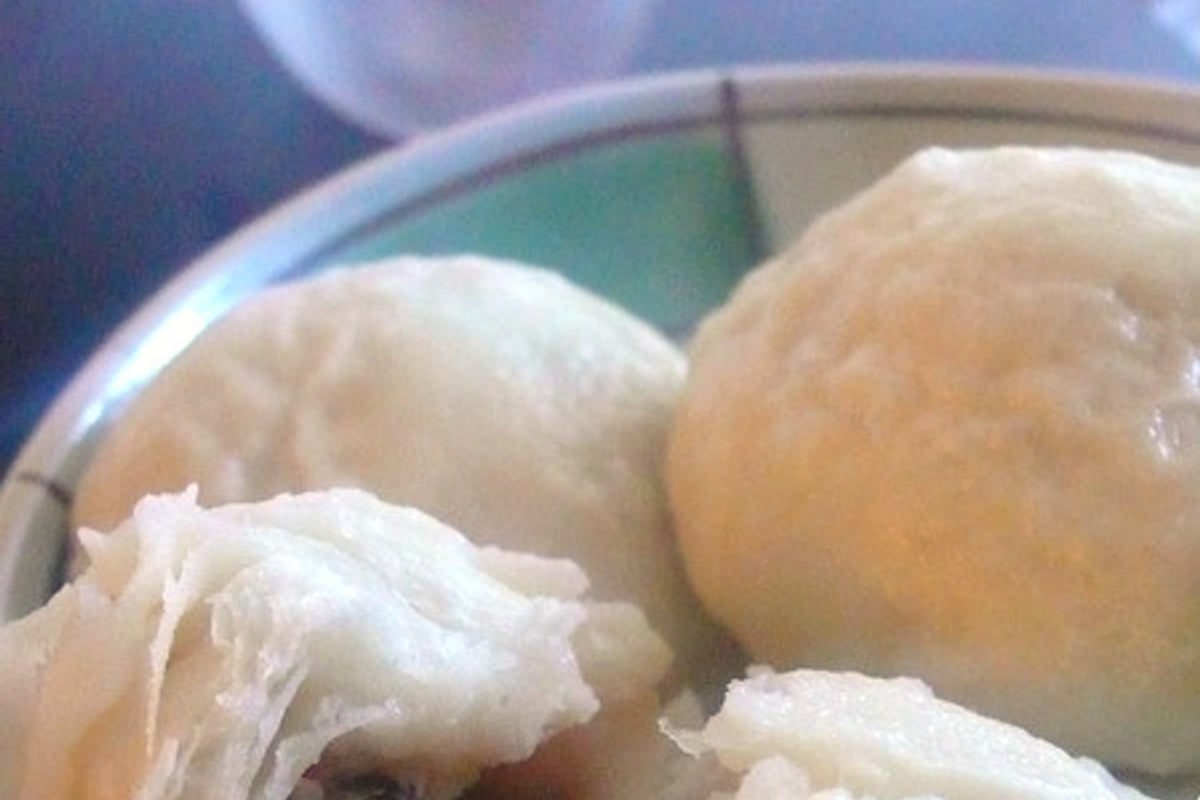
Steaming basket of puffy, multi-layered Yunnanese Po Su Bao buns freshly pulled from morning dough batches. · Photo: Wikimedia Commons (CC BY-SA 4.0)
Sit down midday inside one of Mae Salong's time-tested Yunnanese family diners for their hallmark specialty: steaming Po Su Bao—sourdough-fermented buns folded repeatedly with lard into flaky snow-white layers stuffed with savory black mushroom, scallion, and seasoned minced pork, accompanied by piping hot Yunnan rice noodles ("Mi Xian") simmered in cardamom pork bone broth.
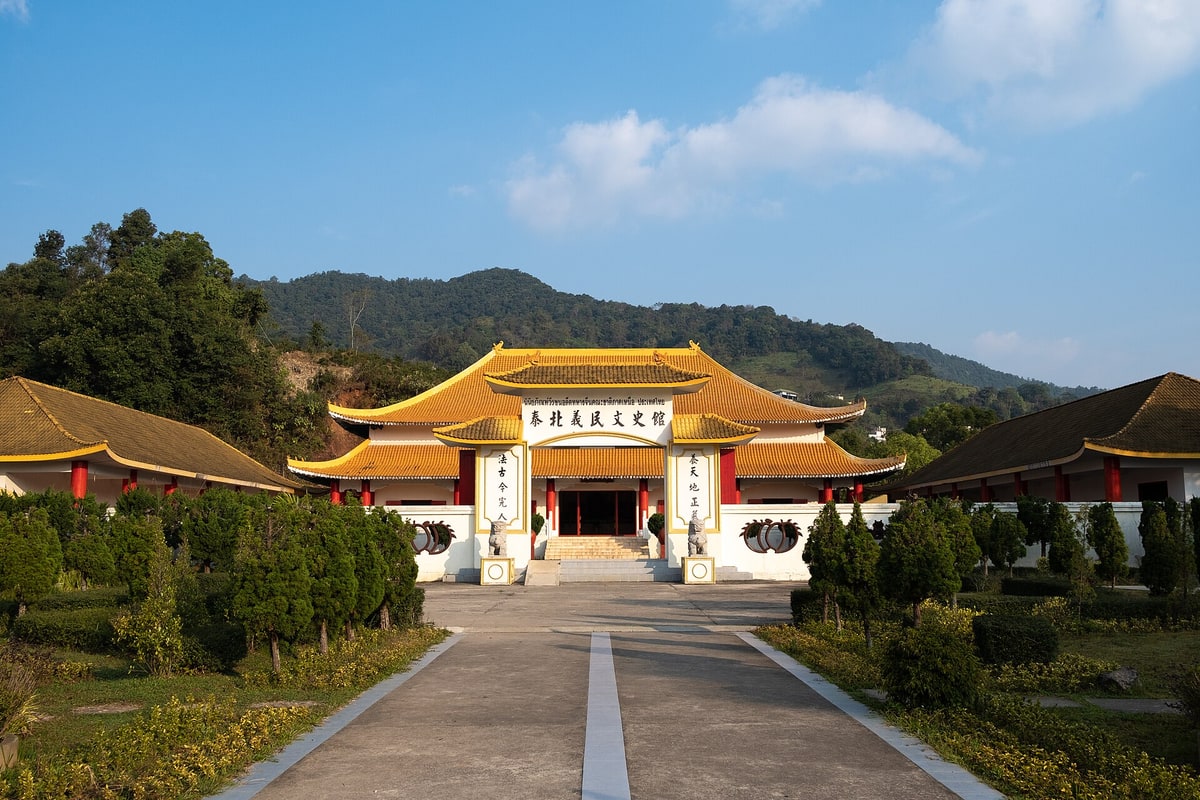
Memorial courtyard and traditional tiled pavilion of the Chinese Martyrs' Memorial Museum in Santikhiri. · Photo: Wikimedia Commons (CC BY-SA 4.0)
Spend the afternoon at the Chinese Martyrs' Memorial Museum (admission 20 THB), flanked by crimson Chinese memorial pillars, historical photographs, maps of 1950s Yunnan–Myanmar marches, and nearby General Tuan Shi-wen's quiet hilltop memorial tomb honoring those who settled Santikhiri before tea cultivation took hold.
Interactive Location & Route Map
Many rural Asian landmarks don’t appear when searching English spellings in Google Maps. Click any numbered stop on the map below or tap the button above to open the exact latitude/longitude pin on your phone.
Frequently Asked Questions
Why are Chinese characters and Yunnanese spoken everywhere in Doi Mae Salong?
After 1949, troops and families from China's Nationalist 93rd Division (3rd and 5th Armies) retreated out of Yunnan across Myanmar into northern Thailand before settling at Doi Mae Salong around 1961. In the 1980s, Thai royal crop-substitution programs and visiting Taiwanese tea masters helped them replace opium cultivation with high-mountain Jin Xuan and Qing Xin Oolong tea.
How can independent travelers get up to Mae Salong from Chiang Rai without renting a scooter?
Board any green public bus heading north toward Mae Sai at Chiang Rai Bus Terminal 1 and tell the conductor "Pak Thang Mae Salong / Pasang." Cross to the waiting green shared songthaews (~60 THB per passenger, ~1 hr uphill climb) that leave when full for Santikhiri. Note return songthaews end around 16:00–16:30, so plan an overnight stay or leave early.
Field Verification & Non-Sponsored Standards
This travel dispatch was researched exclusively through public transport (trains, local branch buses, ferries) and foot exploration. Uncharted Asia accepts zero commercial sponsorships, free stays, or sponsored meals. Timetables, fare gates, and mountain trail conditions are independently verified against physical operator timetables. Learn more in our Editorial Methodology.